At a glance
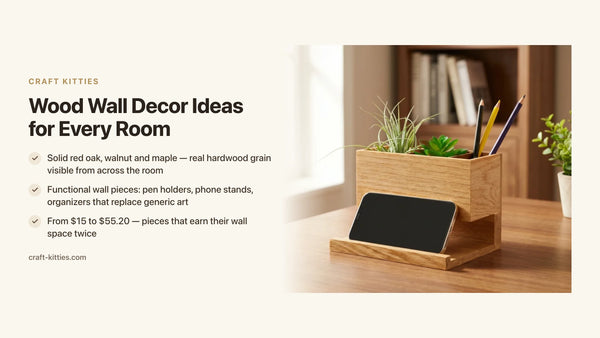
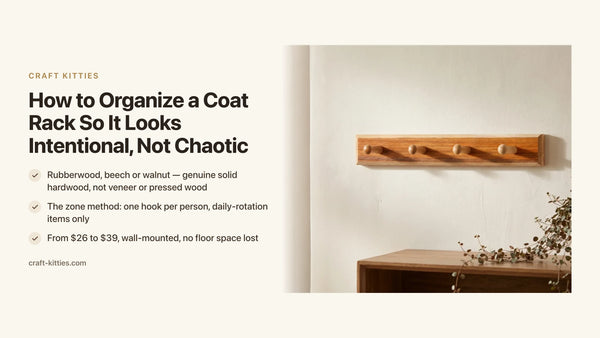
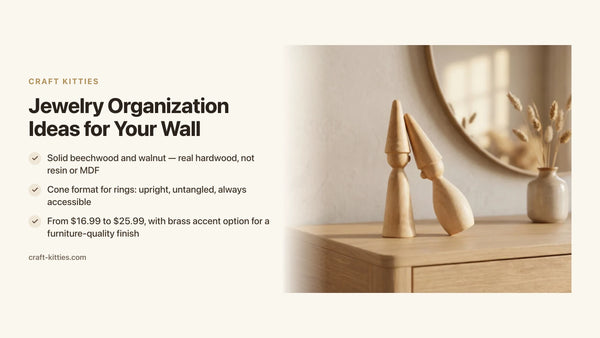
- Solid walnut, red oak and beech — real hardwood grain is the warmth
- One functional object per surface: no decorative noise, no clutter
- The upgrade is a material swap, not a quantity increase
A minimalist room that reads cold is a minimalist room that did not finish the job. The restraint is there — the surfaces are clear, the palette is quiet — but the materials are synthetic, the light is flat, and nothing in the room has grain or weight. The result is a space that feels like a staging photo: correct but uninviting.
Warmth in an interior does not come from adding more things. It comes from choosing the right materials for the things already there. Solid wood, natural fiber, matte ceramics — each carries a physical warmth that lacquered surfaces cannot replicate. A walnut tray on a kitchen counter does more for a room's temperature than a shelf full of decorative accessories. The lever is material, not quantity.
This guide covers the principles behind warm minimalism, the materials that do the work, and the specific objects from our studio that bring solid hardwood into a pared-back home without asking a room to accommodate more clutter. The approach is consistent: each piece earns its place both as an object that works and as a surface worth looking at.
What warm minimalism actually means
Warm minimalism is not a style distinct from minimalism — it is minimalism completed. The vocabulary is the same: clear surfaces, intentional editing, negative space as a design element. The addition is a constraint on materials: in a cold minimalist room, the few objects present are synthetic, chrome or lacquered; in a warm minimalist room, those same few objects are solid wood, undyed textile, matte clay, brushed metal.
The difference is tactile before it is visual. Run your hand along a walnut surface and a lacquered shelf: the wood pushes back with warmth, the lacquer is neutral and cool. That sensory distinction translates directly to atmosphere. A room full of neutral-temperature surfaces reads as clean but impersonal. A room where three or four objects are genuinely warm in material reads as a home.
The editing discipline stays the same. The material discipline is the additional layer. Together they produce the result that neither achieves alone: a space that is calm and inviting simultaneously.
The five principles of warm minimalist decor

Principle 1 — One texture per surface. A walnut grain placed next to a linen weave and nothing else reads as curated. Place three more things next to them and the grain disappears into noise. Warm minimalism works on contrast: each textured element needs clear space around it to register.
Principle 2 — Functional objects only. The minimalist constraint eliminates the purely decorative — there is no room for an object that only exists to be seen. In a warm minimalist home, every piece has a use: a serving tray carries things, a wooden dish holds keys, a linen throw is also a blanket. The aesthetic value is a byproduct of good design, not the primary purpose.
Principle 3 — Material over quantity. One solid walnut tray with visible grain does more visual work than three mass-market plastic or ceramic pieces. This is the swap that changes a room most efficiently: not removing things and leaving a void, but replacing the right object with a better-material version.
Principle 4 — Warm neutrals, not cool grays. The palette should stay on the warm side of neutral. Warm white, greige, dusty terracotta, muted sage — these read with wood naturally. Cool gray and stark white flatten the wood and fight against the warmth the material brings. The test: hold a paint chip next to a piece of walnut. If the color makes the wood look cold, it is the wrong neutral.
Principle 5 — Negative space is the design. The empty shelf is as intentional as the object on it. In a warm minimalist room, surfaces are never filled — they are arranged so that the eye has somewhere to rest between points of interest. Half-empty is not incomplete; it is the condition that makes each piece visible.
Which materials carry warmth — and which ones undercut it

Solid hardwood is the highest-leverage material in a warm minimalist room because it does the most work at the smallest footprint. A piece of solid walnut carries deep brown warmth and a tight, quiet grain; a piece of red oak brings a lighter honey tone with bolder grain that reads across the room; beech sits between the two — pale, clean and understated, the most versatile of the three in a room with a light palette. All three are real hardwoods: their grain is not printed, their warmth does not fade, and they develop character rather than degrading over years of daily use. That is the distinction that matters against veneered or laminate surfaces, which mimic the look but cannot replicate the material temperature.
Undyed linen and cotton add texture at a scale that solid wood cannot — a throw, a cushion cover, a runner. The key word is undyed or subtly dyed: strong pattern competes with the room's quiet; natural fiber without pattern reinforces it.
Matte ceramics in earthy or greige tones absorb light rather than reflecting it, which is why they read as warm while high-gloss ceramics read as clinical. A matte bowl next to a walnut tray creates a conversation between two warm surfaces; a glossy white bowl next to the same tray creates a contrast that flattens both.
The materials to avoid in a warm minimalist room are not complex: chrome, lacquered surfaces, high-gloss paint, plastic in any finish. Each reads as zero-temperature — perfectly clean and utterly uninviting. The problem is not that they are ugly; it is that they do not radiate. A room made exclusively of those materials has no warmth to offer, and adding more objects does not fix that.
Solid wood as the entry point: why one piece changes the whole room
Choosing where to introduce solid wood is often the question that stalls the project. Every surface in the room is a candidate: kitchen counter, dining table, coffee table, hallway shelf. The answer is simpler than the number of options suggests.
Start with the object you reach for most often. In a kitchen, that is typically a tray or a board — something present on the counter through most of the day. In a living room, it is the coffee table surface, or the single decorative object that anchors a shelf. The piece that sees daily use and daily attention is the one where the material upgrade will be noticed most constantly.
The second criterion is visibility. An object that lives in a drawer or a cabinet does nothing for the room's temperature. The solid wood piece that changes a room is one that lives in a sightline: on the open counter, on the low shelf, on the table that anchors the dining area. Material warmth requires visibility to function as design.
A walnut snack tray at $39 is the entry point from our studio. At that price, a single object makes a measurable difference to a room that is otherwise neutral and cool in material. That is not a claim about value — it is an observation about how material warmth compounds: one honest piece makes the next one easier to see.

Description
The walnut cat tray is the piece that appears most often on the counters and coffee tables we hear back about. Its shape is specific enough to be noticed and simple enough not to compete with the room around it. Cut from solid walnut with the grain running through the silhouette, it weighs and feels like what it is: a piece of real wood, not a printed surface. The cat profile reads as a considered choice rather than a generic form, which is why it works in rooms that otherwise avoid the overly decorative.
The kitchen and dining area: where wood earns its place most visibly
The kitchen is the room where the warmth argument is strongest, because it is also the room where the material gap between the ideal and the typical is largest. Most kitchens default to stainless steel, white laminate and plastic containers: a palette that is practical, hygienic and completely cold. The objects on the counter are chosen for function alone; their material temperature is never considered.
A single wooden tray changes that calculation without changing the functional reality of the counter. The tray still does what a tray does — it corrals oils, salts, cutting boards, whatever orbits the prep area. The material upgrade is the only modification. But because the tray is present and visible through most of the kitchen's active hours, the material difference is present and visible for the same duration. One swap, continuous return.
The same logic applies to the dining surface. A wooden serving tray at the center of a table replaces the scattered arrangement of mismatched ceramics with a contained, warm grouping. The table reads as set rather than merely occupied. The warmth is the grain of the walnut; the minimalism is the single organized moment instead of the distribution of unrelated objects across the whole surface.

Description
The living room: wood as the anchor of a composed shelf or table
In a living room, the warm minimalist challenge is the coffee table or the open shelf — surfaces that are often either over-furnished with no coherence, or deliberately left empty and cold. The correct position is between the two: two or three objects, material-consistent, with clear space between them.
A wooden tray anchors that arrangement. It provides a contained plane that reads as intentional, and the objects placed on or around it inherit its intentionality. A candle, a small ceramic, a book — beside a walnut tray, each reads as chosen. Without it, the same group reads as arrived there separately over different weeks.
The grain direction matters on a coffee table in a way it does not on a counter: a tray placed with the grain running lengthwise along the table reinforces the table's horizontal plane. It is the kind of detail that no one names but everyone feels as "the room looks right." The rabbit silhouette, rounded and grounded, tends to read well in living room placements — compact enough to leave space, present enough to anchor a surface.

Description
Product comparison: the three solid walnut trays, side by side
| Tray | Price | Wood | Silhouette | Best placement |
|---|---|---|---|---|
| Walnut Cat Snack Tray | $39.00 | Solid walnut | Cat — upright, compact, recognizable | Kitchen counter, coffee table |
| Walnut Fish Snack Tray | $39.00 | Solid walnut | Fish — elongated, horizontal flow | Dining table center, open shelf |
| Walnut Rabbit Snack Tray | $39.00 | Solid walnut | Rabbit — rounded, grounded, quiet | Coffee table, entryway dish, living room anchor |
Decision matrix: which tray for which room
| Your situation | The right pick |
|---|---|
| Kitchen counter — you want one object that reads as warm all day | Walnut Cat Tray — $39 |
| Dining table center — you want a horizontal anchor for a composed arrangement | Walnut Fish Tray — $39 |
| Living room or entryway — you want a compact, grounded presence | Walnut Rabbit Tray — $39 |
| Gift for someone building a warmer, pared-back home | Walnut Cat Tray — the most recognizable silhouette, easiest to place |
| You want material-consistent warmth across multiple rooms | All three at $39 each — same solid walnut, different forms, coherent warmth room to room |
The entryway: the first surface that sets the room's temperature
The entryway is the highest-leverage surface in a warm minimalist home, because it sets the material expectation for every room beyond it. A chrome key hook and a plastic tray communicate one thing; a walnut dish on a clean shelf communicates another. The first thirty seconds in a space establish what the rest of it will feel like, which is why the entry earns disproportionate attention relative to its size.
The material requirement here is the same as everywhere else: solid wood, honest grain, nothing that mimics. A wooden catch-all dish — a rabbit or cat tray with enough footprint to hold keys, cards and a phone — turns the most transactional surface in the house into a composed one. The functional argument is sound: the dish prevents the scatter of small objects. The design argument is the same: it introduces solid wood grain to the first sightline a visitor encounters, and that first impression carries through the rest of the home.
Description
Mistakes that flatten a warm minimalist room
Using warm materials in cool light. A walnut tray under a daylight-white LED at 5000K looks different from the same tray under a warm 2700K bulb. The material warmth requires light warmth to complete. If a room has solid wood and still reads cold, the bulbs are the likely culprit — switch to 2700K and re-evaluate before adding more pieces.
Choosing wood-look over real wood. Printed wood-grain laminate and wood-look vinyl have the shape of warmth without the material reality. Up close, the grain pattern repeats; the surface has no depth; the temperature is neutral. At the scale of a snack tray or a serving plate, the difference between solid walnut and a printed surface is immediately visible to anyone who looks for two seconds. In a pared-back room with few objects, that distinction is never hidden.
Grouping three objects that share no material thread. A ceramic bowl, a plastic tray and a chrome object on the same surface read as accumulated at different times by different people. Material coherence — two or three objects in the same wood family, or the same metal finish — is what makes a grouping read as composed rather than collected by accident.
Filling the shelf to signal abundance. The impulse in a warm minimalist room is often to keep adding until the room "feels done." The room feels done when each object has space around it, not when all the space is consumed. If a shelf starts feeling full, remove the last thing added and test whether the room reads better. It usually does.
Ignoring the back wall. A shelf arranged against a light wall reads differently from the same shelf against a deep-toned or textured back panel. Walnut against warm white has clear contrast; walnut against warm greige blends in more quietly. Neither is wrong, but the choice is part of the design. The back wall is a material decision, not just a background.
Caring for solid walnut and red oak
Solid hardwood requires less maintenance than most owners expect. The grain is dense; the surface, if properly finished, resists scratches, light moisture and the normal wear of daily handling. The care routine is correspondingly simple.
A dry or barely damp cloth removes dust and surface marks. No solvents, no abrasive cleaners — the finish does the protective work, and harsh products dissolve it. Occasional rubbing with food-safe mineral oil or beeswax — once or twice a year — restores the surface sheen and feeds the wood in dry winter conditions. The wood darkens slightly over months and years, which is not wear. It is the patina that makes a walnut piece look richer at five years than at one.
The one practical rule: do not leave standing liquid on solid wood. A tray used for drinks should be wiped after each use. The grain swells minimally under prolonged water contact; a quick wipe before the water soaks in prevents the issue entirely. It is the same care a piece of solid wood furniture requires — brief and habitual rather than demanding.
Where to go next
The cat-shaped serving plates collection brings together all three silhouettes — cat, fish and rabbit — in the same solid walnut, at the same entry price. Each piece in the collection follows the same material logic: real hardwood, honest grain, a shape specific enough to register and simple enough to place in a room that is already pared back. If one tray is the entry point, the collection is the coherent set.
For specific products: the walnut cat shaped serving plate and the walnut fish shaped serving plate are the two highest-traffic pieces in the collection and the most versatile across kitchen, living room and entryway placements.
FAQ — warm minimalist home decor
1 — What makes a minimalist interior feel warm rather than cold? Material honesty, not quantity. Solid wood with visible grain, undyed linen, matte ceramics — each brings a natural warmth that synthetic or lacquered surfaces cannot replicate. The edit is the same as in any minimalist room; the material selection is the additional layer that resolves the cold.
2 — Can you use patterns in a warm minimalist room? In strict moderation. One organic pattern — wood grain, a linen weave — reads as texture in a quiet room. Two patterns in the same sightline compete. The rule is contrast: a patterned element only lands when everything around it is still.
3 — What wood is best for a warm minimalist aesthetic? Walnut is the most versatile: deep brown tone, tight grain, present without being dominant. Red oak brings lighter, honeyed warmth with bolder grain — more dynamic in brighter spaces. Beech is the understated option: pale, clean, the easiest to pair with any palette. All three are solid hardwoods that age into the room rather than degrading over time.
4 — How many decorative objects is too many in a minimalist home? A practical rule: each surface should have at least twice as much empty space as it has objects. If three things on a shelf feel like they are touching, remove one. The negative space around each object is what makes the object readable — and what makes the room feel intentional rather than full.
5 — What colors work in a warm minimalist interior? Warm whites, soft greiges, dusty terracotta, muted sage. Avoid cool grays and stark whites, which flatten the warmth that wood and natural fiber bring. The test is simple: hold a paint chip next to a piece of walnut — if the color makes the wood look cold, it is the wrong neutral for this palette.
6 — Is a solid wood serving tray a functional or decorative object? Both — which is precisely why it belongs in a minimalist home. A walnut tray serves a real purpose and reads as décor when not in use. Every object in a warm minimalist room should justify its footprint in both directions: it either works or it pleases, and in the best cases it does both without choosing.
7 — How do you add warmth to a kitchen without cluttering it? Replace one category of generic object with its solid-wood equivalent. A walnut snack tray instead of a ceramic bowl or a plastic cutting board. One material swap visible on the counter changes the temperature of the room without adding any new objects to the count.
8 — Is warm minimalism the same as Japandi or Scandinavian style? Related but not identical. Japandi explicitly mixes Japanese wabi-sabi with Scandinavian hygge and has specific cultural references. Warm minimalism is less codified: a pared-back space where natural materials provide the interest and the heat, without prescribing a cultural grammar or a specific combination of influences.
9 — Does solid walnut darken over time? Yes, gradually — and it is a feature, not a flaw. Walnut develops a richer, deeper tone over months and years of light exposure and regular handling. The patina that builds is the kind of aging that makes a piece look more considered at five years than at one. It is the opposite of how synthetic surfaces behave when they age.
10 — Where is the best place to start if the whole room needs warming up? The kitchen counter or the coffee table — whichever surface you look at most often during the day. One solid wood piece on a high-visibility surface changes the room's material temperature more efficiently than multiple small changes elsewhere. Start with one tray, in real walnut, and let the eye calibrate before adding anything else. The full collection of cat-shaped serving plates is a good starting point — and if you prefer to browse reviews first, we have 243 of them on Etsy from customers who made the same first swap.
The short version
Warm minimalism is minimalism that finished what it started. The editing discipline is already there — the surfaces are clear, the palette is quiet. The addition is a material constraint: the few objects that remain are made of something honest. Solid walnut, red oak and beech carry warmth that no synthetic surface replicates, and they do it at the footprint of a single tray.
The walnut cat shaped serving plate is the entry at $39. The walnut fish shaped serving plate works the dining surface and open shelving. The walnut rabbit shaped serving plate grounds a living room coffee table or an entryway dish. Three shapes, one wood, coherent warmth across every room that uses them.