At a glance
- Rubberwood, beech, and walnut wall racks that double as charging hubs
- Entryway, nightstand, desk — one system per room
- From $26 to $39, solid hardwood, 2 to 6 hooks
Three rooms in a typical home create most of the cable chaos: the entryway where you drop everything when you walk in, the nightstand where devices charge while you sleep, and the desk where work and personal devices share the same six square feet. Each has a different spatial constraint, a different daily rhythm, and a different visual standard to meet. This guide treats them as three separate problems that share one underlying solution: replacing plastic cable towers and tangled power strips with solid wood hardware that earns its place on the wall or surface.
The products covered here are wall hook racks in rubberwood, beech, and walnut — all solid hardwood, all designed to carry coats and bags while also structuring a small charging zone behind or below the rack. No veneered particleboard, no printed "wood-look" laminates. The difference matters in use: a solid hardwood rack drilled into studs handles a winter coat, a laptop bag, and a gym bag simultaneously without flexing. A veneered alternative does not, and shows it within a season.
At a glance
- Rubberwood, beech, and walnut wall racks that double as charging hubs
- Entryway, nightstand, desk — one system per room
- From $26 to $39, solid hardwood, 2 to 6 hooks
Why the entryway is the right place to start
The entryway is the room most people decorate last and organize first, which creates a predictable pattern: the coat goes on the closest chair, the bag hits the floor, the phone gets plugged in somewhere between the door and the kitchen. Three weeks later the hallway has an improvised staging area that nobody chose and everyone tolerates.
A wall hook rack solves two things at once. It gives coats and bags a permanent vertical home, which keeps the floor clear. And because it anchors a fixed point on the wall at the right height, it is also the natural mounting point for a small charging station — a power strip positioned on a shelf below the rack, or a cable grommet routed through the panel so that a phone cable hangs at bag-drop height. The habit forms naturally: you walk in, coat on the hook, bag on the lower peg, phone plugged in. One motion, one place.
The wood matters here for a specific reason: an entryway surface takes contact from wet coats, wet bags, leather straps, and metal buckles every day. Solid rubberwood or walnut finishes — oil-waxed or lacquered — handle that contact without marking. Veneered panels delaminate at edges within months of regular friction. The look difference is also real: solid wood grain reads as furniture; particleboard with a photo-laminate reads as temporary.
Choosing the right number of hooks
The hook count question sounds simple until you actually live with the wrong answer. Too few hooks creates the same floor piles the rack was meant to eliminate; too many hooks on a narrow rack looks crowded and makes it harder to grab a single coat without moving three others.
The reliable formula: four hooks per adult, minus one, rounded to the nearest even number. For one person — three or four hooks. For two people — five or six. For a household with kids, add two low pegs below the adult row and count them separately. The four-to-six adjustable range on the rubberwood veneer models covers most households without forcing a size decision up front.
Hook profile also shapes daily use. Boot-profile hooks — the swept, curved tip that mimics the toe of a boot — keep bag straps and coat collars from sliding off when weight shifts. Straight pegs work for light scarves and keys; they fail under a canvas tote and a winter parka stacked together. For an entryway that handles real daily load, boot-profile hooks on a solid panel is the durable choice, not the decorative one.

The nightstand charging station: one cable, zero clutter
The nightstand is a small surface that does three jobs simultaneously: it holds a lamp, it stores whatever you reach for in the first thirty seconds of waking up, and it charges devices overnight. Most nightstands fail the third job because charging was never designed into the surface — it was retrofitted with individual cables that each need their own outlet, their own cable path, and their own way of tangling with everything else.
The clean version of a nightstand charging setup rests on two structural decisions. The first is consolidation: one charging dock that handles phone, watch, and earbuds from a single power input. The second is material: a solid wood dock or tray with a deliberate footprint keeps the charging zone looking like a chosen object rather than a necessary mess. The rack lives in the back third of the nightstand, cables route down and back, and the front two-thirds of the surface stays usable.
The two-tone beech and walnut rack works particularly well in a bedroom context. The contrast between the light beech body and the walnut trim is quiet enough to read as furniture rather than tech hardware — which matters in a room where the visual goal is usually calm. Two hooks at bedside height are enough: one for a robe or tomorrow's outfit, one for a bag or headphones. Below or beside the rack, a small tray concentrates the charging cables into a single zone.
Wall-mounting directly above the nightstand is the more radical option and the cleaner one. It frees the entire nightstand surface — lamp on one corner, nothing else required — and routes cables through the wall down to an outlet. The visual result is close to a hotel room: deliberate, calm, nothing surplus.
Desk charging: structure first, then cable management
At a desk, the charging problem is compounded by the work problem. A laptop, a phone, earbuds, and sometimes a tablet all need power, and they all land in different corners of the surface depending on which task is active. Cable management at a desk is fundamentally a placement problem before it is a hardware problem: devices spread because there is no defined charging zone, and without a zone, cables follow the devices wherever they drift.
The fix is spatial before it is material. Designate one corner of the desk — the corner nearest the outlet, typically — as the charging corner, and put something solid there that makes the designation visible. A wood rack or tray with a deliberate shape signals to the eye that this corner has a purpose. Devices go to the corner when they need power; they return to the workspace when they do not.
A wall-mounted rack above the desk adds a vertical dimension to the same logic: charging cables hang from a hook at head height, devices hang from the cable while they charge, and the desk surface stays clear. For a desk where wall space is available directly above, this is the highest-density solution — it adds charging organization without claiming any desk area at all.
The wood choice on a desk surface is worth a moment's thought. Walnut is the most visually harmonious with darker desk setups — espresso-stained wood, dark metal, black monitor stands. Beech reads cleaner against light wood and white surfaces. Rubberwood with a veneer face sits between the two and accepts either context. None of the three will show heat marks from a charger at normal operating temperatures.

The four wall hook rack models from our studio
Each of the four models below is solid hardwood — not veneer, not MDF with a wood-effect finish. The distinction is not marketing language: solid hardwood holds a screw reliably, resists the surface contact of daily use, and does not delaminate at edges when wet bags and coat straps hit it repeatedly. Veneered alternatives look comparable in product photography and show the difference within a year of use.

Description
The rubberwood rack with Brazilian veneer is the most practical piece in the lineup for a working entryway. Rubberwood is a dense, stable hardwood — the same category as beech and harder than most pine — and the Brazilian veneer facing gives it a warm, mid-tone grain that reads closer to teak or mahogany than the pale rubberwood substrate beneath. Four to six hooks in boot profile means a single rack covers one or two people without crowding; the modular count lets you configure for the actual household rather than guessing at a size. At $39, it is the most substantial piece in this category and the right choice when the entryway will carry daily full loads.

Description
The cherry veneer variant on the same rubberwood core shifts the palette toward a richer, warmer red-brown — closer to classic American cherry than to the orange pine often marketed as "warm wood." In a hallway with warm lighting, terracotta or ochre walls, or existing wood pieces in the red-brown family, the cherry veneer rack reads as intentional where a neutral beech or walnut piece would look borrowed from another room. Same boot-profile hooks, same four-to-six count, same rubberwood strength — different visual register. At $37, it sits just below the Brazilian veneer model, with no functional difference.

Description
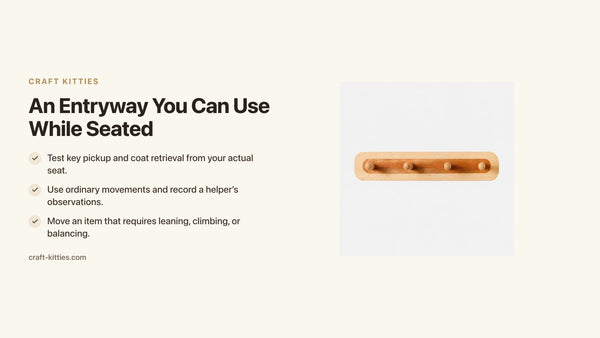
The two-tone beech and walnut rack is the most adaptable piece in the lineup — starting at two hooks for a bedroom or home office, scaling to six for a shared hallway. The contrast between light beech and the walnut-toned hardware or accents is quiet enough that the rack fits both Japandi-leaning bedrooms and warmer, more rustic entryways without looking out of place in either. Solid beech is a tight-grained hardwood — the same material used in butcher blocks and professional furniture precisely because it resists surface marking and holds fasteners well. At $26, it is the entry point for this category and the right first piece for someone upgrading from plastic hooks or hollow-core particleboard alternatives.

Description
Solid walnut in a four-hook row with boot-profile hardware is the piece for rooms where the wall is a design decision rather than just a storage solution. Walnut — black walnut, specifically — is one of the few North American hardwoods that darkens and gains character with age rather than fading. The tight, fine grain reads as furniture-grade from across a room; the boot-profile hooks carry coats and bags without any of the visual heaviness of industrial metal peg rails. At $28.80 for four hooks, it is priced for a single buyer's setup: one person, one entryway wall, one rack that will still look right in ten years.
Comparison table
| Model | Price | Wood | Hooks | Best for |
|---|---|---|---|---|
| Rubberwood — Brazilian veneer | $39.00 | Solid rubberwood + Brazilian veneer | 4 to 6 | Full entryway drop zone, heavy daily use |
| Rubberwood — Cherry veneer | $37.00 | Solid rubberwood + cherry veneer | 4 to 6 | Warm-tone entryways and hallways |
| Beech & walnut two-tone | $26.00 | Solid beech + walnut accents | 2 to 6 | Bedroom, office, lighter-use hallway |
| Walnut boot-profile, 4-hook row | $28.80 | Solid walnut | 4 | Statement entryway, one to two people |
Decision matrix — which setup for which room
| Your situation | The right pick |
|---|---|
| Entryway, two adults, heavy coats and bags daily | Rubberwood Brazilian veneer, 4–6 hooks |
| Hallway with warm walls, red-brown wood floors | Rubberwood cherry veneer, 4–6 hooks |
| Bedroom or home office, minimal load | Beech & walnut two-tone, 2–4 hooks |
| Entryway statement piece, one or two people | Solid walnut, 4-hook boot-profile row |
| Mixed room — entryway plus desk plus bedroom | Beech & walnut two-tone (neutral, fits all three) |
How to install a wall hook rack as a charging station in four steps
1 — Find the studs. A rack that carries daily coat and bag weight needs to be anchored in at least two studs, not just drywall. Stud finders are accurate enough for this; tap the wall and listen for the solid tone if you do not have one. Mark both centers with a pencil before drilling anything.
2 — Plan the cable path before you mount. Decide where the power strip will sit — on a shelf below the rack, inside a nearby drawer, or mounted to the wall behind the panel — and route the cable path mentally before the first screw goes in. Once the rack is fixed and the hooks are loaded, reaching behind to adjust a cable is genuinely difficult.
3 — Mount the rack, then the cable infrastructure. Mount the rack first, level, into the studs. Then add the cable management layer: a small shelf below for a power strip, a cable clip along the wall edge for the supply cable, and a short extension cable or USB hub positioned so that the charging end sits within easy reach of the hook closest to the door. The rack is structural; the cable layer is secondary.
4 — Establish the drop-zone habit deliberately. A physical zone only works if its use becomes automatic. The first week is deliberate — coat on hook, bag on lower peg, phone to cable. By the second week it is reflex. The test is whether the floor stays clear and the phone is charged every morning without thinking about it.
Three mistakes that undermine a good charging station setup
Treating cable management as the last step. It is the second step, after placement and before mounting anything. Running a cable behind a mounted rack into a wall is a thirty-minute job that turns into three hours if you have to unmount and re-mount the rack to route it properly.
Under-sizing the hook count. A four-hook rack for a two-adult household creates daily negotiation for hook space — which coat goes where, whose bag gets a hook versus the floor. The math is simple: four hooks per adult, rounded up to the next even number. A hook with no coat on it costs nothing. A hook that is missing costs the floor.
Mixing wood species without a connecting element. A rubberwood Brazilian veneer rack next to a raw pine shelf and a walnut tray reads as accidental. Either keep all the wood in the room within one species family, or connect them with a repeating hardware finish — the same matte black or brushed metal on every piece. The hardware thread is what makes mixed wood tones look intentional rather than accumulated. Our wall hook rack collection is organized around coherent wood and hardware families for exactly this reason.
Wood care for racks in high-contact zones
A wall hook rack in an entryway lives in the highest-contact zone in the home: wet coats, leather straps, metal bag hardware, and occasional direct water from outdoor wear. Rubberwood and beech with an oil or wax finish handle this well with minimal maintenance. Solid walnut with a lacquer or wax coat is similarly resilient.
Routine care is two things: wipe the surface with a dry or barely damp cloth when it looks dusty or marks accumulate, and re-wax once a year if the piece has a wax finish. Oil-finished pieces can take a light re-oil in the same interval. Neither process takes more than ten minutes; neither requires sanding or stripping the existing finish. The wood will show some character over time — a slight deepening of tone, minor surface marks in high-contact spots — which is what solid hardwood does and what veneered alternatives cannot recover from once the surface breaks.
What to look for in a charging station shelf or tray
The wall hook rack handles the vertical: hooks, weight distribution, the cable drop point. The shelf or tray below handles the horizontal: the flat surface where devices actually sit while charging. These are two different objects solving two different parts of the same problem, and they work best when chosen to match.
A shelf below the rack wants three things: enough depth to sit a phone flat without it hanging off the edge (eight to ten inches minimum), a back lip or edge detail that keeps items from sliding off when a coat catches the air as it lands on a hook, and a finish that matches the rack overhead. A tray on a nightstand or desk wants a more defined footprint — three to five inches wide, long enough for one or two devices side by side — and low, rolled edges that corral cables without catching on them.
The Rubberwood Wall Hook Rack with Brazilian Veneer and the Two-Tone Beech & Walnut Wall Hook Rack both pair well with a matching wood tray below for a cohesive, intentional setup. The wood species and finish families stay consistent, and the whole arrangement reads as a system rather than a collection of separate purchases.
FAQ — home charging station ideas
1 — What is the best wood for a home charging station? Rubberwood, beech, and walnut are the most practical choices. Rubberwood is dense and dimensionally stable, making it resistant to the low-level heat that chargers emit. Beech has a tight grain that stays smooth over time. Walnut is the most visually striking — deep brown, fine grain — and is worth the slight premium if the piece will live in a visible spot like an entryway or nightstand. All three are solid hardwood, not veneer, which matters for long-term durability.
2 — How do I hide charging cables in my entryway? Route cables through the center of the rack's panel using a small cable grommet, or run them flat against the wall behind the rack and conceal them with a narrow cable channel painted to match the wall. A wall hook rack with a lower shelf gives you a natural landing zone for a compact power strip, keeping the brick out of sight. The key is planning the cable path before you mount anything — drilling later breaks the rhythm.
3 — Can I use a wall hook rack as a charging station? Yes, and it is one of the most efficient setups for a home entrance. A wall hook rack already anchors the wall at the right height for bags and coats. Adding a small shelf or tray below it — or mounting a compact power strip behind the panel — turns the rack into a drop zone where coats, bags, and devices all land in one motion. The wood surface handles bags and keys without scratching, and the hooks keep the space vertical rather than sprawling across a console table.
4 — What is the cleanest nightstand charging setup? The cleanest setup uses a single charging dock that handles multiple devices — phone, watch, earbuds — from one cable exit point. On a wood nightstand, a solid hardwood rack or tray corrals everything into one footprint and prevents the nightstand surface from becoming a tangle of individual cables. The goal is one cable going down to the outlet, nothing else visible.
5 — Is solid wood safe near chargers and electronics? Yes. The heat output from modern USB-C and wireless chargers is low enough that solid hardwood — rubberwood, beech, walnut — sits well within safe proximity. Wood does not conduct electricity, and a waxed or oiled finish resists the minor warmth chargers generate. The wood pieces to avoid near heat sources are veneered particleboard and MDF, which can delaminate over time. Solid hardwood is stable.
6 — How many hooks do I need for an entryway charging station? For a single person, four hooks cover a coat, a bag, an umbrella, and one spare. For two people sharing an entryway, six hooks is the minimum that keeps things from piling on one peg. If the entryway also needs to handle kids, plan for at least two hooks per person plus one or two lower pegs for smaller items. A rack that scales from four to six hooks, like the rubberwood veneer models, is the most practical buy for households that grow.
7 — What is the best placement for a nightstand charging station? On the nightstand surface, pushed toward the back third — close enough to reach without sitting up, far enough that it does not crowd the sleeping area. If the nightstand is narrow, a wall-mounted solution directly above it frees the entire surface. Cable entry from the back keeps the front face clean. The most important detail is that the charging dock should be visible enough to grab your device in the dark without knocking things over.
8 — How do I build a charging station for my desk without it looking messy? Group all charging in one corner of the desk rather than spreading devices across the surface. A solid wood rack, tray, or stand gives that corner a deliberate look — it reads as a station, not clutter. Run cables through a small grommet in the desk or tape them flat along the underside. One power strip under the desk, one cable up through the surface, one charging zone: that is the structure that keeps a desk clean.
9 — Can a wall hook rack hold heavy bags and coats? Yes, when it is mounted into studs or with the appropriate anchors for drywall. A solid rubberwood or walnut rack with boot-profile hooks distributes weight better than straight pegs and prevents bags from sliding off. For a household that hangs winter coats and heavy tote bags daily, mounting into at least two studs is worth the extra care at installation.
10 — What does "boot profile" mean on a wall hook? The boot profile refers to the curved, swept-tip shape of the hook — a silhouette that resembles the toe of a boot. That curve keeps bags, coat straps, and scarves from sliding off the end of the hook when the weight shifts. It is the preferred shape for entryways where the hooks carry heavy or bulky items daily, versus a straight peg, which is more decorative than load-bearing.
Where to go from here
A wall hook rack is the highest-leverage piece for an entryway charging setup — it solves coat storage, bag storage, and cable organization in a single mounted object. From there, the two pieces that extend the system most naturally are a matching wood tray for the surface below the rack and a second rack or set of hooks for a secondary room. Browse the full wall hook rack collection to compare wood species and hook configurations, or start directly with the Rubberwood Wall Hook Rack with Brazilian Veneer — the most versatile model in the lineup for households with real daily load.
If you are building out from a nightstand or desk rather than an entryway, the Two-Tone Beech & Walnut Wall Hook Rack is the most adaptable starting point: two hooks is enough for a bedroom setup, and the scale goes up to six when the need grows. Our studio's pieces are reviewed by over 243 customers on Etsy, if you want to read independent feedback on fit, finish, and installation before buying.