At a glance
- Wall: mount a hook rack first — it solves 80% of entryway chaos without touching the floor
- Surface: one tray near the door captures keys, wallet and glasses permanently
- Vertical: hooks + shelf above = the whole system in 12 inches of wall depth
The average American entryway measures under 20 square feet. Most have no closet, no bench, no dedicated storage of any kind — just a stretch of wall between the front door and the rest of the house. And yet everything that enters and leaves the home funnels through it: coats, bags, shoes, keys, mail, umbrellas, dog leashes, hats, the items you swear you left somewhere you could find them.
The problem is not lack of space. It is lack of system. A small entryway that works is not one with more square footage — it is one where every object that passes through has an assigned place to return to. This guide builds that system from first principles: what to mount on the wall, what belongs on the surface, how to handle shoes, and which products from our studio solve each problem without adding visual weight to a space that cannot afford it.
Why the wall is the only real asset in a small entryway
Floor space in a small entryway is too scarce to invest in freestanding furniture. A console table with legs, a freestanding coat rack, a floor-mounted shoe cabinet — each one claims area that does not exist or narrows the passage to the point where moving through becomes awkward. The wall, by contrast, is almost always available and almost always underused.
The shift in thinking that unlocks a small entryway is vertical: treat the wall as primary storage and the floor as transit space only. A wall hook rack mounted at the right height holds as many coats and bags as a freestanding rack at a fraction of the floor footprint — zero, if it is wall-mounted correctly. A floating shelf above the hooks adds surface area without a single leg touching the ground. A small tray on the shelf or on a narrow ledge captures keys, glasses and small items that otherwise drift into every room in the house.
This approach is not a design compromise. It is the design principle that makes high-end mudrooms work even in tight dimensions: storage moves up, floor moves freely, and the room reads as open rather than crowded.
The right order for setting up a small entryway

Sequencing matters here because each layer depends on the one before it. Start with hooks on the wall and you immediately solve the most visible problem: coats and bags on the floor. Once hooks are in place, the tray location becomes obvious — the surface within arm's reach when you walk in, typically a narrow ledge or the shelf above the hooks themselves. Shoes come third, in the lowest zone, because once the upper wall and surface are resolved the shoe solution almost suggests itself. The shelf is last because it is optional in the tightest spaces but extends capacity significantly once the other three layers exist.
Rushing to step four without completing step one is the mistake that makes entryways feel perpetually overwhelmed. You add a beautiful tray but coats are still on the floor; you install a shoe rack but bags are still piled on top of it. Work the layers in order and each new element has context — it extends a system rather than adding another isolated object to an unsolved room.
Step 1 — A wall hook rack: the anchor of the system
A wall hook rack is the highest-return investment in a small entryway. Mounted at the right height, it removes coats and bags from the floor permanently, consolidates them onto a single surface, and keeps them visible enough to grab without a search. It does all of this without occupying floor space.
The sizing question is simpler than it seems. For a two-person household, four hooks is the working minimum: two for daily coats, one for bags or backpacks, one for guests. Six hooks let you add a slot for umbrellas and dog leashes without crowding. More than six on a narrow wall rack starts to feel cluttered; the coats compete for space and the aesthetic advantage of the wood disappears behind layers of outerwear.
Hook placement matters as much as hook count. The dominant height range for adult coats is 60 to 66 inches from the floor — high enough that long coats and dresses clear the baseboard, low enough that reaching for a bag does not require stretching. If children need to reach the hooks independently, a second lower row at 48 inches gives them their own zone without touching the adult configuration above.
The wood species affects durability as well as appearance. Beech and walnut are hardwoods with good screw retention — the hooks they carry hold weight reliably over years of daily use. Rubberwood with a hardwood veneer reaches a similar structural performance at a lower price point while adding the visual warmth of a real wood surface. Particleboard or hollow-core panels lose grip progressively under the weight of heavy winter coats; avoid them in a spot that takes this much daily stress.

Description
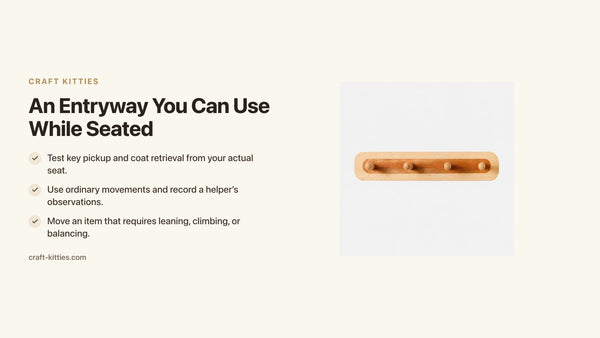
The rubberwood rack with Brazilian veneer is the anchor piece for a small entryway that needs a hook rack to carry real weight without looking like hardware. The rubberwood core holds each hook firmly even when the rack supports bulky winter coats and a loaded backpack simultaneously; the Brazilian veneer face brings visible grain that reads as furniture rather than utility. Available in a 4-hook and 6-hook configuration, it fits a wall as narrow as 24 inches and scales to a more generous entryway without needing a second install.

Description
The cherry veneer version of the same rubberwood rack shifts the palette toward warmer, redder tones — a natural fit for entryways with earth-tone walls, terracotta accents or existing cherry and mahogany furniture nearby. The build is identical: solid rubberwood core, the same hook spacing and load capacity, the same 4-to-6 hook range. The choice between the two is purely visual — which grain reads better against the wall you have.
Step 2 — The catchall tray: a home for everything that disappears
The second system failure in a small entryway — after coats on the floor — is the missing keys. Or the missing wallet, the missing glasses, the transit card that was definitely just here. These items do not disappear; they drift. Without a designated landing spot within arm's reach of the front door, they migrate to countertops, jacket pockets, bathroom shelves, the bottom of bags. The fix is structural, not behavioral: a tray with raised edges, positioned exactly where your hand naturally drops things when you walk in.
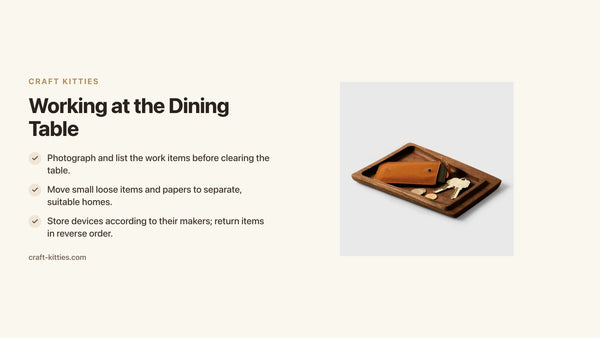
A solid wood tray earns its place here for a practical reason beyond aesthetics. Keys scratch acrylic and wear through the coating on painted metal trays over time. Wood absorbs the impact, resists scratching, and does not mark or scratch the objects inside it. A tray with a lip of at least half an inch prevents items from rolling off — keys especially, which have enough momentum to slide across a flat surface and off the edge before you notice. The right size is larger than intuition suggests: a tray that fits only a key and a coin purse fills immediately and forces the overflow back onto the surface around it. Aim for a tray that accommodates keys, a wallet, glasses, sunglasses and a small item or two simultaneously.
Position matters as much as the tray itself. The ideal spot is the surface you touch first when you walk in — the top of a narrow console, a floating ledge, the shelf above the hook rack. If the tray requires a step and a turn to reach, it will not be used consistently enough to work as a system.
Step 3 — Shoes: limit active pairs, contain the rest
Shoes are the biggest source of floor clutter in a small entryway, and the category most resistant to a simple fix. The constraint is real: a single pair of sneakers takes up more space than any other daily object, and most households have more than one pair in active rotation at any given time.
The workable rule is two active pairs per person, maximum, in the entryway itself. That means the shoes worn this week — not the options, not the backups. Everything else goes in a closet, a bedroom, or a dedicated shoe cabinet elsewhere in the home. Enforcing this limit is the organizational work; the storage solution just needs to hold the active pairs cleanly.
A low bench with a slatted shelf underneath solves the entryway shoe problem in the smallest footprint: the bench provides a place to sit while putting shoes on, the shelf below keeps active pairs off the floor and out of the traffic path, and the visual height stays low enough not to compete with the hook rack above it. The total depth of a standard bench is 12 to 14 inches — modest enough to work in a hallway that is only 36 inches wide without making the passage feel narrow.
For spaces too tight for even a narrow bench, a shoe tray on the floor is the minimum-footprint solution: it keeps muddy soles off the floor finish, contains the footprint of active shoes in a defined zone, and signals clearly where shoes belong, which reduces the drift that makes entryway floors feel perpetually messy.
Step 4 — Vertical extension: a shelf above the hooks

The shelf is optional in the tightest spaces but extends the system's capacity significantly when wall height allows it. Mounted 6 to 8 inches above the top of the hook rack, it serves three functions simultaneously. First, it takes hats and gloves off the hooks where they would otherwise pile on top of coats, keeping each hook dedicated to its intended item. Second, it creates a secondary surface for items that did not make it into the tray — mail, a transit card, sunglasses from a bag pocket. Third, it becomes the seasonal swap zone: winter hats and gloves move up there in October, down and into storage in April, with summer hats cycling in the opposite direction.
The shelf depth should match the hook rack's depth — typically 4 to 6 inches — so the two pieces read as a single vertical unit rather than two separate objects competing on the same wall. A shelf deeper than the hook rack creates an awkward overhang that feels unresolved. When the two dimensions align, the hook-plus-shelf configuration functions like a purpose-built mudroom panel in a fraction of the footprint.
The two hook racks that extend the system

Description
The two-tone beech and walnut rack is the pick for entryways where the surrounding décor already mixes wood tones — a light oak floor against darker furniture, or a walnut console beside beige-painted walls. The contrast between beech's pale, tight grain and walnut's deep brown creates a visual rhythm on the wall without requiring the room to commit entirely to one wood family. The 2-to-6 hook range makes it the most configurable piece in the lineup: at 2 hooks it fits a tight apartment foyer; at 6 hooks it scales to a family household without a second install. At $26.00 it is also the most accessible entry point to a solid wood hook system in real hardwood — beech and walnut, not particleboard or veneer composite.

Description
The walnut boot-profile rack answers a specific need: hooks deep enough to hold structured bags without the handle slipping off the end. Standard coat hooks have a forward curve designed primarily for flat fabric; the boot profile adds depth to the hook itself, which keeps leather bags, belts with hardware and bulky winter coats seated rather than sliding. In solid walnut — a dense, fine-grained hardwood that holds its finish well over years of use — this rack works as hard as it looks: quiet, considered, and built to handle daily weight at $28.80.
Comparison table — wall hook racks for small entryways
| Model | Price | Wood | Hooks | Best for |
|---|---|---|---|---|
| Brazilian veneer hook rack | $39.00 | Rubberwood + Brazilian veneer | 4 or 6 | The anchor piece, visible grain, heavy daily load |
| Cherry veneer hook rack | $37.00 | Rubberwood + cherry veneer | 4 or 6 | Warmer palette, earth tones, existing cherry nearby |
| Two-tone beech & walnut | $26.00 | Solid beech + walnut | 2 to 6 | Mixed-tone rooms, most configurable, best value |
| Walnut boot-profile rack | $28.80 | Solid walnut | 4 (fixed) | Structured bags, belts, heavier coats, clean profile |
Decision matrix — which rack for which situation
| Your situation | The right pick |
|---|---|
| You want one statement piece that anchors the whole wall | Brazilian veneer hook rack |
| Warm earth-tone or terracotta palette | Cherry veneer hook rack |
| Mixed light/dark wood tones already in the room | Two-tone beech & walnut |
| You carry structured leather bags or heavy coats daily | Walnut boot-profile rack |
| Tightest budget, solid hardwood non-negotiable | Two-tone beech & walnut — from $26.00 |
How to install a wall hook rack in a small entryway
Installing a hook rack takes under 20 minutes. The decisions made before picking up the drill matter more than the install itself.
Mark the stud first. Hook racks carry real weight daily — winter coats, loaded bags, umbrellas. An install into drywall alone, without anchors or studs, will fail. Use a stud finder to mark one stud, then align the rack so at least one mounting point hits it. For a rack narrower than 16 inches (the standard stud spacing), toggle bolts rated for 50 lbs each make a solid alternative when studs are not available at the right position.
Set the height before marking the wall. The range is 60 to 66 inches from floor to hook tip for adult use. Measure it on yourself: stand in your shoes, hang your arm naturally at your side, and mark where the hook would need to be for your coat to clear the baseboard by 2 inches. That number beats any chart because it accounts for your actual coat length.
Level the rack before tightening. A hook rack that is 2 degrees off horizontal is almost invisible in isolation and immediately obvious the moment you hang a coat on it: the coat swings to one side and the imbalance becomes all you see. Use a small spirit level on the rack itself — not on the wall, which may not be perfectly plumb — before driving the final screws.
Leave one hook open. The first week after installation, leave one hook deliberately empty. That gap reminds every household member that the system has capacity and keeps the rack from filling immediately with overflow items that belong elsewhere. The open hook is also the guest hook — useful to keep available year-round.
Mistakes that keep small entryways disorganized
Installing hooks before assigning items to them. A hook rack without a pre-assigned system fills randomly and stays chaotic. Before mounting anything, decide: hook one is for coats, hook two for bags, hook three for the dog leash. The assignment does not need to be labeled; it just needs to exist in the household's shared understanding. Once every hook has a designated item, the entryway tidies itself — objects return to their hooks by habit, not by decision.
Choosing the wrong depth hook for what you carry. A shallow hook rated for flat fabric fails with structured bags, which slide off the tip end. The boot-profile or J-profile hook — the kind with a deeper curve — is the right choice for leather bags and belts. Standard curved hooks are fine for knit scarves and light jackets but will frustrate you with anything that has rigid straps.
Overloading the tray. A catchall tray that holds more than 7 or 8 items stops working as a system. It becomes a pile rather than a collection. Anything that has not moved in a week does not belong in the entryway tray; it belongs elsewhere in the house. The tray is for daily carry and daily return, nothing else.
Underestimating seasonal change. An entryway system sized for a winter coat wardrobe is cramped for summer bags and hats, and vice versa. Build the system for the heaviest season and plan the swap: winter coats move to a hall closet in April, summer hats move off the shelf in October. A 15-minute biannual swap keeps the rack working at full capacity year-round instead of at 50 percent during off-season.
Treating the entryway as overflow storage. Amazon boxes waiting to be opened, dry cleaning to return, items borrowed from a neighbor — these accumulate in the entryway because it is the point of transition between outside and inside. Give each of these categories a hard limit: one box at a time, zero items on the floor for more than 24 hours. The entryway is a system for daily-use objects, not a holding zone for everything that needs a decision later.
What to do with a wall that has almost no space
Some entryways truly have almost no usable wall — a narrow hallway where the only wall is interrupted by a door frame, a light switch, a thermostat and a return vent, with 18 inches of clear wall remaining. That 18 inches is enough for a 2-hook configuration. Two hooks and a small tray below — or a tray on a narrow floating ledge — handle coats for one person and daily carry for a household.
The back of the front door is the second surface worth considering. Over-door hooks rated for a standard panel hold bags and light jackets without touching a wall, without requiring hardware, and without leaving any mark on the door if you use the loop-over-panel style. They are not a permanent system but they work as a bridge until a more complete entryway wall becomes available — after a renovation, after a move, or once the furniture arrangement in the adjacent room shifts enough to free a longer run of wall.
A mirror with integrated hooks is the final option for a genuinely wall-constrained entryway: it provides a functional surface, a daily-use object and a visual expansion of a tight space simultaneously. The trade-off is price and complexity relative to a standalone hook rack; it works best when the space needs the mirror independently and the hooks are a bonus rather than the primary reason for the purchase.
FAQ — organizing a small entryway
1 — What is the most important thing to put in a small entryway? A wall hook rack. It solves the most visible problem — coats and bags on the floor — without consuming any floor space. Once hooks are in place, every other element of the system has context and layers in naturally.
2 — How many hooks do I need? Four for a two-person household: two coats, one bag, one guest. Six if children share the rack or if the entryway also handles umbrellas and leashes. Beyond six on a single horizontal row, hooks compete for space and the rack loses its visual coherence.
3 — How high should coat hooks be mounted? Between 60 and 66 inches from the floor for adults, measured to the hook tip. The seated-arm-reach test is more reliable than any chart: sit on a stool at the height you would put shoes on, extend your arm, and mark where a hook would need to be for your coat to clear the floor. For children, a second row at 48 inches gives them reach without touching the adult system.
4 — Can I install a hook rack without drilling? Yes, for lighter loads. Heavy-duty adhesive strips rated at 10 to 15 lbs per hook hold a rack carrying bags and light jackets on smooth drywall or painted tile. For heavy winter coats and daily backpacks, two screws into a stud hold more reliably over time.
5 — What wood works best for an entryway hook rack? Beech, walnut and rubberwood with hardwood veneer are all solid choices. Beech is dense and resists denting from hardware contact; walnut reads like furniture rather than utility; rubberwood with Brazilian or cherry veneer adds visible grain at an accessible price. All three hold hooks firmly under daily load.
6 — How do I keep the entryway tidy every day? Assign a specific hook or slot to every object before installing. Coats on hooks one and two, bag on hook three, keys in the tray. When everything has a designated place, returning objects is automatic — no decisions, just habits. The system does the organizational work once it is set up.
7 — Is a shelf above hooks worth adding? Yes, when wall height allows. A shelf 6 to 8 inches above the hook row takes hats and gloves off the hooks, creates a second landing surface for mail and small items, and handles the biannual seasonal swap. The total footprint in wall depth stays at 4 to 6 inches — no floor space added.
8 — What should go in a catchall tray near the front door? Keys, wallet, glasses, transit card — daily-carry items that disappear without a home. A tray with raised edges on a surface you touch when you walk in captures them before they drift. Solid wood trays work better than acrylic here: they do not scratch keys and add warmth to a functional zone.
9 — Should shoe storage be open or closed? Open storage is faster to use but shows everything including mud and wear. A bench with a slatted shelf below is the middle path: shoes are accessible, off the floor, and visually contained at a low enough height not to compete with the hook rack above. Limit active pairs to two per person in the entryway; box the rest.
10 — What if my entryway has almost no wall space? Even 18 inches of clear wall holds a 2-hook configuration — enough for one coat and one bag. The back of the front door is the second surface: over-door hooks require no hardware and hold bags and light jackets without marking the door. Mirror-with-hooks combinations are the third option when wall real estate is genuinely near zero.
Where to go next
The hook rack is the starting point for a well-organized entryway, not the ending point. Our wall hook rack collection brings together every configuration — from 2-hook minimal to 6-hook family scale, in beech, walnut, rubberwood with veneer and two-tone combinations — so the right piece for your wall size and aesthetic is findable in one place. If you are building out the full system, the Rubberwood Wall Hook Rack with Brazilian Veneer is the anchor to start from; the Two-Tone Beech and Walnut rack is the most versatile pick when the room already mixes wood tones.
For customers who found us on Etsy and want to read customer reviews before ordering — we have 243 reviews there and they give a clear picture of what the racks look like installed in real homes.
One system, applied consistently
The entryway does not need more space. It needs a system applied in the right order: hooks on the wall for coats and bags, a tray within arm's reach for daily carry, a contained zone for active shoes, and a shelf above for the items that rotate seasonally. Each layer is simple on its own; together they turn a corridor into a room that works from the first step inside.
The solid wood pieces in our wall hook rack collection are built to carry that daily load for years — real beech, real walnut, real rubberwood with hardwood veneer, not particleboard or printed panels that loosen over repeated use. If the system is going to work every day, the hardware it depends on should be built to match that standard.