At a glance
- Observe where wet coats drip before moving dry essentials.
- Keep damp outerwear away from surfaces that cannot take moisture.
- Treat persistent wetting as a source to resolve, not a storage problem.
A wet coat needs a place to hang, but the first open hook may be beside dry mail, a wood console, or a basket that should stay dry. Before changing the entryway, observe where water actually falls and what is in that footprint. Then create a clear temporary wet zone, move dry essentials out of it, and check the area again after the coat is removed.
This is a way to map and manage a household condition. It does not promise that a hook, wall finish, or wooden organizer is waterproof, and it does not set a universal drying time. If the entryway keeps becoming wet, address the source of moisture rather than treating storage as the only fix.
Observe the drip footprint before rearranging
On a rainy day, notice the path from the door to the current coat hook. Look for water on the coat hem, sleeves, umbrella, shoe area, wall, or floor. If safe to do so, place a removable towel or washable mat where drips are actually landing. Keep it flat and out of the walking route so no one trips over it.
Do not deliberately soak a wall hook, wood accessory, or floor finish as a test. Record where the water appears during ordinary use. A phone photo can help you compare the location after a coat has been removed, but do not treat one observation as proof of how the area behaves in every storm or household routine.
Separate wet outerwear from dry essentials
Move mail, keys, bags, and dry accessories out of the observed drip zone. Choose a location that stays clear of the door swing and everyday path. If the current coat rack is close to the door, make sure a wet garment does not touch papers or objects below it. Avoid placing a wooden catchall directly beneath a dripping hem.
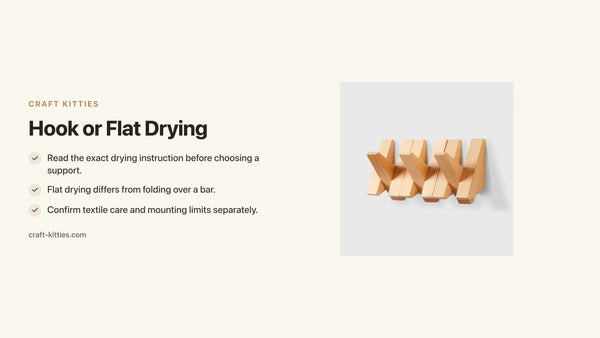
Use what you observe in your own entry. If you can’t keep dry items away from the drops, move them to another existing shelf, drawer, or room until the wet area is resolved. The two-tone beech wall hook rack is listed in 4-hook, 5-hook, and 6-hook widths of 320, 400, and 480 mm. That evidence gives the rail widths; it does not say how much wet weight it supports or that the surrounding finish resists water.
| Wet item | Observed drip footprint | Dry items to relocate | Maker limit to confirm | Unresolved surface condition |
|---|---|---|---|---|
| Coat hem dripping near the wall | Mark where water reaches the floor or wall during normal hanging | Mail, framed paper, bags, or a wood tray directly below | Ask the rack maker about rated use and care; do not infer a load rating | Check for paint change, swelling, peeling, or damp trim |
| Umbrella shedding water | Identify the actual drip path and where it can stand without blocking passage | Shoes, fabric bags, or stored paper in that path | Follow umbrella stand or floor mat maker instructions | Check for standing water after the umbrella is moved |
| Several damp jackets touching | Note the area where sleeves and hems overlap | Dry coats and items behind or below them | Do not assume hook spacing means a wet-load capacity | Look for continuing condensation or a damp wall |
| Wet footwear near the door | Mark the footprint beneath the shoes | Small rugs, paper bags, wood organizers | Follow footwear and flooring care directions | Check whether water is reaching a seam or edge |
The chart asks what you observed and what remains unknown. It does not claim that a specific rack or finish is suitable for wet exposure. Do not hang more garments than the product maker allows, and do not modify or remount a rack to create extra capacity without appropriate instructions.
Keep the route and floor clear
A wet zone cannot make the entryway harder to walk through. Keep the door’s full swing clear, avoid placing a bucket or mat where feet must step over it, and leave a route to the rest of the home. If the only dry location is outside the main path, use that existing space rather than adding an obstacle by the threshold.
If more than one person uses the entrance, coordinate where coats and umbrellas go so they do not overlap the same narrow patch of floor. Move the wet item to the designated area one at a time and check that dry items remain accessible. For a broader entryway layout, see our guide to organizing a coat rack and our guide to organizing a small entryway. This article focuses on wet/dry separation after you observe where water is landing.
Recheck after the coat has been removed
When the garment is no longer in the entry, look at the surface where it hung and the floor beneath it. If you see moisture, do not leave the area covered by a wooden item, paper, or fabric that could remain damp. Follow the maker’s directions for the affected surface and keep the area ventilated in the ordinary way your home allows. Do not use a heat source or a cleaning mixture unless the surface manufacturer recommends it.
The EPA’s guidance on mold and moisture emphasizes controlling moisture and visible condensation. If a spot stays damp, water reappears, or condensation keeps forming, investigate the moisture source or report it to the responsible property manager. This article is not a diagnosis or a mold-remediation procedure. The USDA Forest Products Laboratory notes that a finish’s cleanability depends on the finish selected, so ask the product maker before treating a wooden accessory as washable or water-resistant.
Decide what changes when the pattern repeats
One drip after a storm and recurring dampness are different observations. For an isolated event, move dry essentials, blot or clean surfaces only according to their care directions, and note whether the spot clears. If the same wall or floor becomes wet repeatedly, document when it happens, what is wet, and whether condensation or a leak may be involved. Share those facts with the property manager or an appropriate professional.
Keep an “unknown” column in your note. The hook’s load limit, the wall coating’s moisture tolerance, and the finish on a nearby wooden organizer are not established by a photograph or an outside dimension. Ask the relevant maker rather than filling in those blanks with assumptions.

Description
Use a simple reset for the next wet arrival
Before putting away a wet coat, move dry items away from the mapped drip footprint and check that the walking path remains open. Hang or place the coat in the temporary wet zone without exceeding the maker’s stated use. Once it is removed, inspect the wall, floor, and nearby objects. If the surface remains damp or the same wetting recurs, pause the normal routine and resolve the source.
That reset is more useful than a guessed “dry in an hour” rule. Fabric thickness, room conditions, and how wet the garment is all vary. Let the garment maker’s care instructions guide drying, and do not describe the wooden rack as waterproof or as a drying appliance.
FAQ
Where should I hang a wet coat in a small entryway?
Use the spot where ordinary drips can be contained without wetting dry items or blocking the route. Observe the actual drip footprint first and move mail, bags, and wood accessories away from it.
Can a wooden coat rack hold dripping coats?
The product evidence here does not establish water resistance or a wet-load rating. Ask the maker about intended care and limits, and keep recurring moisture away from the rack and wall until you have an answer.
How long does a wet coat take to dry?
There is no universal time; fabric, how wet it is, and room conditions vary. Follow the coat maker’s care directions and observe the garment rather than relying on a fixed estimate.
What if the wall stays damp after the coat is gone?
Move dry items and report or investigate the persistent moisture source. EPA guidance recommends controlling moisture and visible condensation, but a persistent damp spot may need a property manager or qualified professional.