At a glance
- Solid red oak, walnut or beech — real hardwood, not veneer or MDF
- From $29.99 with key rack to $55.20 desk organizer; every room has its right model
- The guide covers species, sizing, placement and the desk-vs-entryway decision
The catchall tray is the smallest piece of furniture in the house and the most used one by far. Keys, wallet, phone, earbuds, coins — the same objects that end up in a different place every morning, the ones you are always looking for. A wood catchall tray solves this with a single move: one fixed surface, one rule, one place where those objects live. The search stops.
The decision that trips people up is not whether to buy one — it is which one. The category looks deceptively simple in photos: a wooden tray, a few items inside, a clean surface. In practice, the species of wood changes how the tray reads in the room; the depth and proportions determine what actually fits; the finish controls how the piece ages; and whether you want a wall-mounted entryway solution versus a freestanding desk organizer are two entirely different answers to the same problem. This guide moves through each of those decisions in order, presents every model from our studio with real prices and a comparison table, then answers the questions we hear most often.
One thing to establish before anything else: this guide covers solid hardwood. Red oak, walnut, beech — real wood, from the surface to the base. A catchall tray made from MDF with a wood-grain film reveals itself quickly: the corners chip, the finish dulls, it cannot be refinished because there is no wood underneath to work with. A hardwood tray is a piece that holds up and develops character instead.
What "catchall" actually means — and why it matters for sizing
The word catchall describes any shallow container used to corral small everyday objects. In the context of home organization, it covers a specific behavioral pattern: the tendency to deposit items from your pockets or bag on the nearest flat surface the moment you walk in. The tray does not change the habit — it channels it. The habit lands in one place instead of spreading across the counter, the nightstand, the corner of the desk.
Sizing follows from that function. The useful exercise is empirical: collect every object you routinely set down on the surface where the tray will sit. Keys, cards, coins, AirPods, a watch, a ring — lay them out, measure the footprint, add two inches of margin on each side. That is the tray size you need. A tray that is too small means objects pile on top of each other and the system breaks; a tray that is too large eats more surface than the objects it contains. For most single-person everyday-carry collections, a tray in the 8-to-10-inch range covers the need. For shared entryway use — two sets of keys, two wallets — a wider format or a tray paired with a key rack works better.
At a glance
- Sizing rule: measure your actual pocket-carry footprint, add 2 inches of margin
- Entryway vs desk: different depth, different width, different wall-anchoring needs
- Species choice: red oak for light rooms, walnut for contrast, beech for neutrality
Red oak, beech or walnut — choosing the species

The three species in our lineup behave the same structurally — all are dense hardwoods that resist scratching, hold their shape and take a finish cleanly. The choice is almost entirely about the grain and tone, and how those read against the surface the tray will sit on.
Red oak is the lightest of the three, with a bold, open grain that catches light and draws the eye. In a bright, neutral interior — white walls, light countertops, pale tile — red oak stands out without competing. It is the pick for rooms that tend toward the airy side and need an object with presence. The grain pattern is pronounced enough to read as decorative on its own; it does not need anything else on the surface to make the tray feel intentional.
Beech sits in the middle of the palette: a creamy, almost maple-like tone with a fine, tight grain that reads as quiet and precise. It is the most neutral of the three, which makes it the easiest to live with across different rooms and lighting conditions. Beech does not demand attention, it complements. For a desk where the focus should stay on the work rather than the objects beside it, beech is the discreet choice.
Walnut is the pick that consistently dominates contemporary home décor for a reason. Deep brown, warm undertones, fine grain — it reads as furniture-grade even at the size of a small tray, and it contrasts naturally against light-colored surfaces (desks, countertops, painted wood furniture) without effort. If the existing room already has walnut tones, a walnut catchall tray extends the system. If the room is all light-toned, walnut becomes the accent that makes the surface look considered.
The practical rule: choose by contrast. A light room calls for walnut or red oak so the tray registers as an object with presence. A darker or more saturated room calls for beech or red oak to lighten the surface without adding visual weight.
Entryway vs desk: two different problems, two different formats
This is the fork in the road that no amount of browsing product photos resolves without a deliberate answer. An entryway tray and a desk tray solve different problems, sit on different surfaces and typically have different proportions. Treating them as the same object leads to a tray that does the wrong job in the wrong spot.
The entryway problem is about the moment you walk in. Keys, phone, wallet, bag — they need a place to land immediately. The entryway catchall tray is deposit-and-go; it is less about display and more about the system holding at a moment of low attention. Here, the key rack is often the right complement: hooks above the tray for keys, tray below for the rest. Wall mounting makes sense because the entryway usually has no dedicated furniture surface — a floating tray-and-rack unit turns a blank wall into a functional station.
The desk problem is different. The items that migrate to a desk surface do so slowly, over hours. Charging cable, pen, sticky notes, a pair of earbuds — they accumulate at the edge of the keyboard while you are working. A desk catchall tray tends to be deeper and more carefully positioned than an entryway solution because it lives in constant view during the workday. It also needs to coexist with the monitor, the keyboard and whatever else is on the surface — which usually means a narrower, more rectangular format rather than a wide, open bowl.
Understanding which of these two problems you are solving makes the model choice obvious. The sections below present the products with that lens.
The models from our studio, in detail

Description
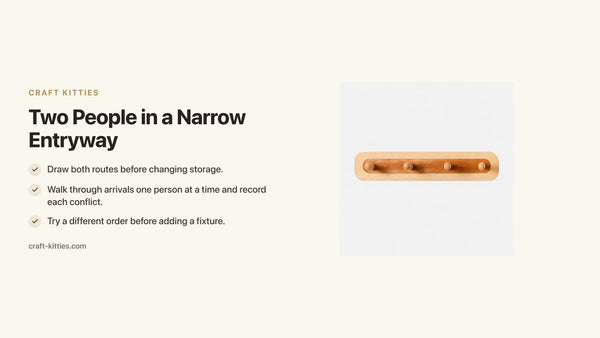
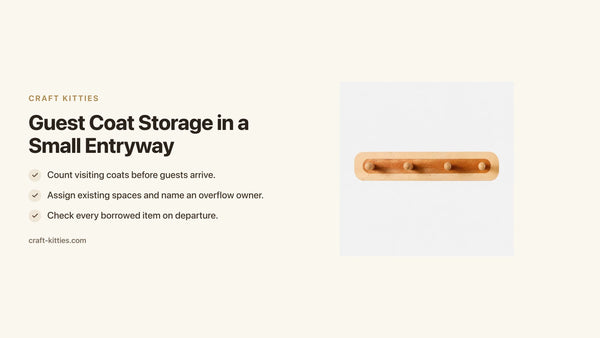
The Hardwood Valet Tray & Key Rack at $29.99 is the most focused piece in the lineup: a compact solid hardwood tray mounted below a key rack, turning an empty stretch of entryway wall into a working deposit station. Keys hang on hooks at eye level; wallet, phone and everyday items land in the tray beneath. The combination eliminates the two most common morning searches — keys and wallet — in one gesture. The tray is finished with a natural oil coat that protects the grain without altering its tone, and the wall mount keeps the entire unit off the console surface, freeing that surface for other use.

Description
The Hardwood Valet Tray Desk Organizer at $47.20 is a freestanding desk solution cut from a single piece of hardwood — maple, beech or walnut — with finger-joint corners that give the tray structural rigidity and a detail that reads as craftsmanship up close. The cavity is deeper than a typical catchall tray, which means pens, a charging cable, a watch and a pair of earbuds all coexist without piling. The natural oil finish closes the grain and leaves the wood matte — it does not compete with the monitor or the work on the desk. This is the tray for people who spend eight or more hours a day at that surface and want the objects beside them to feel resolved rather than random.

Description
The Solid Wood Valet Tray Desk Organizer at $55.20 is the top of the lineup. The same hardwood species — maple, beech or walnut — cut from thicker stock, with more refined joinery and a heavier coat of natural oil that gives the grain a depth you notice when the light hits the surface at an angle. The proportions are also slightly larger, which makes this the right choice for a wider desk or for someone whose everyday carry genuinely needs more room. At this price point, the tray crosses into gift territory: it is specific enough to feel considered, functional enough to be used daily, and the hardwood finish means it will look better five years from now than it does on the day it arrives.
Comparison table
| Model | Price | Wood | Format | Best for |
|---|---|---|---|---|
| Hardwood Valet Tray & Key Rack | $29.99 | Solid hardwood | Wall-mounted tray + key rack | Entryway — keys + everyday carry |
| Hardwood Valet Tray Desk Organizer | $47.20 | Maple, beech or walnut | Freestanding, deep cavity | Desk — daily driver organizer |
| Solid Wood Valet Tray Desk Organizer | $55.20 | Maple, beech or walnut | Freestanding, thicker stock | Wide desk, premium finish, gifting |
Decision matrix — which model for which situation
| Your situation | The right pick |
|---|---|
| Entryway with blank wall, keys always misplaced | Hardwood Valet Tray & Key Rack — $29.99 |
| Desk organizer, everyday driver, value pick | Hardwood Valet Tray Desk Organizer — $47.20 |
| Wider desk, want the premium finish | Solid Wood Valet Tray Desk Organizer — $55.20 |
| Nightstand — watch, ring, earbuds overnight | Hardwood Valet Tray Desk Organizer — $47.20 |
| Dresser top — coins, cufflinks, accessories | Solid Wood Valet Tray Desk Organizer — $55.20 |
| Gift — housewarming or birthday | Solid Wood Valet Tray Desk Organizer — $55.20 (walnut) |
Where to place a wood catchall tray — room by room

Entryway. The entry point of the house is where the system matters most. Objects deposited here on arrival stay accessible for departure — the sequence is automatic. The wall-mounted key rack and tray combination works best here because there is rarely a dedicated furniture surface, and because wall-mounting removes the tray from the counter clutter entirely. The rule is simple: the tray goes at the same height your hand naturally swings when you walk in. No mental effort required to use it.
Desk. The desk is the surface that suffers most from creep — the slow accumulation of small items that migrate from pockets, bags and other rooms over the course of a workday. A catchall tray positioned at the front corner of the desk (on the non-mouse side) captures this drift without interrupting the working zone. The key is that the tray has a fixed place; when items end up elsewhere on the desk, the correction is obvious. For standing desks, the same logic applies — the tray sits at the far front corner where items land naturally during height transitions.
Nightstand. The nightstand version of the catchall tray solves the end-of-day routine: watch, ring, earbuds, phone — everything comes out of pockets in one sweep, everything goes into the tray. By morning, the search time is zero. A freestanding desk organizer works perfectly in this role; it does not need a key rack, and the deeper cavity keeps smaller items like rings and earbuds from rolling onto the nightstand surface.
Dresser. The top of a dresser accumulates coins, receipts, cufflinks, ties, watches and a dozen other items that have nowhere else to go. A wood catchall tray here is not a desk organizer — it is a sorting layer that separates "keeps" from "empties-at-end-of-week". The wider, thicker-stock model at $55.20 suits the dresser format particularly well: it has the proportions of a piece that belongs on that surface rather than one borrowed from a desk.
The finish — what it does and what it does not do
The finish on a hardwood catchall tray matters more than it is usually given credit for. It determines how the wood ages, how it handles daily contact, and what maintenance it actually requires. Our trays are finished with a natural oil coat — penetrating, not film-forming — which means it seals the grain from within rather than sitting on top as a plastic layer.
What that gives you in practice: a surface that is easy to wipe, resistant to the moisture from a damp wallet or a phone that just came in from rain, and one that does not show the micro-scratches that accumulate on lacquered surfaces over time. The oil finish ages gracefully — it develops a gentle patina rather than peeling or crazing. It also means the tray can be refreshed at any point with a light coat of beeswax or furniture oil. A lacquered tray that begins to crack has no recovery path; an oiled hardwood tray always does.
What the finish does not do: it is not waterproof. An oiled hardwood tray handles ambient humidity and occasional moisture without issue, but a puddle left inside for hours will raise the grain. The maintenance rule is correspondingly simple — keep the cavity dry, wipe it when something spills. No sanding, no stripping, no recurring maintenance ritual.
Mistakes that make a good tray useless
Placing the tray in a spot you do not pass naturally. A catchall tray only works if the deposit behavior is effortless. If you have to walk across a room or detour from your natural path to use it, you will not use it consistently, and the objects will continue to land wherever they land. The tray goes on the path, not on an aspirational surface.
Choosing a tray that is too large for the available space. A tray that dominates the surface it sits on creates more visual noise than it solves. Measure the footprint of the objects you actually carry, not the maximum size of the surface available.
Mixing wood species with no thread. A walnut tray next to a light oak lamp base and a bamboo pen cup reads as a collection of accidents rather than a composed surface. If the room has a dominant wood tone, match it. If it does not, pick one and start with the tray.
Treating the tray as overflow storage. A catchall tray works because it has a clear function: daily carry items only. The moment it becomes a general deposit zone — batteries, old receipts, mystery cables — the system collapses. The discipline is not in the tray; it is in the rule you apply to it.
FAQ — wood catchall trays
1 — What is a catchall tray actually for? A catchall tray gives the objects you carry every day — keys, wallet, phone, watch, coins, earbuds — a fixed home so they stop migrating to random surfaces. In a bedroom it doubles as a nightstand organizer; on a desk it corrals the items that would otherwise creep across the entire surface. The system is behavioral: deposit everything in one move, locate everything without searching.
2 — What size should a catchall tray be? For a single person's everyday carry, a tray in the 8-to-10-inch range is usually the right fit. The reliable test: gather every item you currently drop on that surface, lay them out, measure the footprint, add two inches of margin. That is the size you need — nothing aspirational about it.
3 — Red oak, beech or walnut — does the species change anything beyond looks? On structural performance, very little: all three are dense hardwoods that resist denting and hold a finish well. The choice is aesthetic. Red oak is light with bold, open grain; beech is cream-toned and neutral; walnut is deep warm brown with a tight grain that currently dominates contemporary home décor. If the room already has established wood tones, matching the species is the safe path.
4 — Can a wood catchall tray go in the bathroom? Yes, provided it has a sealed finish. Our trays are finished with a natural oil coat that closes the grain and makes the surface easy to wipe. They handle bathroom humidity without issue. The one precaution is avoiding standing water left inside the tray for extended periods.
5 — Is a wood catchall tray a good gift? One of the more practical gifts: used daily, visible on a surface the recipient cares about, and specific enough not to feel generic. For a housewarming, pairing a catchall tray with a matching wood piece from the same species makes the gift read as a set. Walnut tends to be the most universally appreciated finish for gifting.
6 — How is a wood valet tray different from a catchall tray? The terms are used interchangeably. Technically, valet tray has roots in men's grooming — the tray that holds a gentleman's pocket contents at day's end — while catchall covers any tray used to collect miscellaneous items. In practice, both solve the same organizing problem. The distinction matters most when searching: valet tray results skew toward bedroom and nightstand use, catchall results skew toward entryway and desk.
7 — What is the difference between the $47.20 and the $55.20 models? Both are freestanding hardwood desk organizers. The $55.20 model uses thicker stock, has more refined joinery and a heavier oil finish that gives the grain more visible depth. The proportions are also slightly larger. The $47.20 model is the right choice for most desks; the $55.20 earns its price on a wider desk surface or as a gift where the weight and finish of the piece need to be evident on first contact.
8 — How do I keep a wood catchall tray looking its best? The natural oil finish does the protective work. A dry cloth for dust, a barely damp cloth for anything that sticks. No harsh products. Once or twice a year, a light pass of beeswax or furniture oil keeps the grain looking rich. The tray will develop a gentle patina with use — this is normal on hardwood, not wear.
Where to go next
A wood catchall tray is often the first piece from our studio that finds its way into a room — and rarely the last. Our valet tray collection brings together the full lineup: from the wall-mounted entryway solution to the premium desk organizer, all in the same solid hardwood species so rooms can build a consistent wood language piece by piece. If you are starting with the entryway, the Hardwood Valet Tray & Key Rack at $29.99 is the most efficient first move. For the desk, the Hardwood Valet Tray Desk Organizer in beech or walnut at $47.20 is what most people come back to after they have tried it on a surface and want more. You can also find our pieces on Etsy, where 243 customers have shared their setups — useful if you want to see the trays in context before ordering.
Conclusion — one tray, a resolved surface
The method that holds across every room: solve for the deposit behavior first (where do objects actually land?), then size the tray to fit the real carry not the aspirational one, then choose the species by contrast with the surface the tray will sit on. The Hardwood Valet Tray & Key Rack at $29.99 answers the entryway problem without asking for a console table. The Hardwood Valet Tray Desk Organizer at $47.20 resolves the desk. The Solid Wood Valet Tray Desk Organizer at $55.20 is what to reach for when the surface, the gift or the finish justifies it. Three models, three rooms, one principle: a fixed home for the objects you carry every day makes every surface they touch look intentional.