At a glance
- Record loose components before the first sort.
- Use trays only as visible, temporary play zones.
- Count pieces again, then return them to the game’s own packaging.
Board-game pieces left on a table between adult game sessions are easy to scatter, mix, or overlook when it is time to pack away. A simple close-out routine makes the pieces easier to account for: note the loose components before play, use separate temporary zones during the session, and compare the same groups before returning them to the original box or organizer.
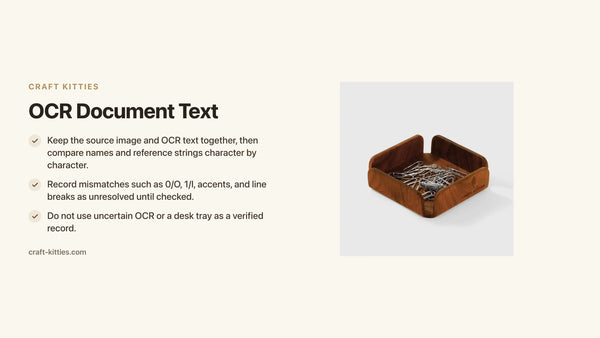
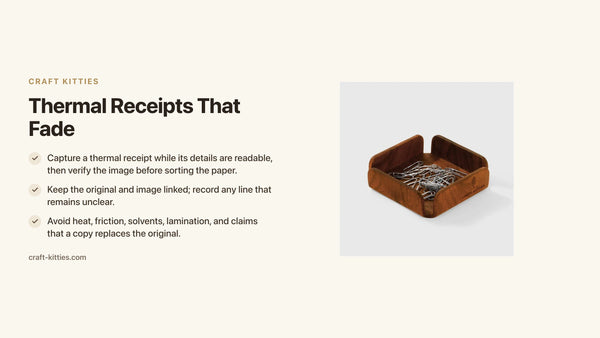
A wooden tray can be a visible work surface for small tokens, dice, or pieces currently in use. It should not be mistaken for game packaging or a secure long-term container. Keep the game’s own insert, bags, or boxes for storage, and follow the game maker’s instructions where a component has a specific place.
Record the component groups before play
Before setting up, look at the game’s components and note which loose groups matter to your session. You do not need to inventory every card if cards remain in a deck or sleeve. Focus on the items most likely to travel: shared tokens, dice, player markers, counters, and loose pieces removed from the box.
Use the rulebook or component list as your reference if the game provides one. Record the number of pieces you take out for play, not a total you cannot verify. If the game includes similar-looking extras, keep them separate and identify them as spares rather than folding them into the active count.
This count is a household check, not a claim that the game set is complete or that a tray can contain every part. If you discover a piece missing before play, note it before the session instead of changing the return count later.
Make visible zones that match how the game is played
Place temporary trays or bowls near the players who use the shared pieces. Use one zone for active tokens, another for dice if they are repeatedly rolled, and the table itself for cards or boards that must stay in play. Do not dump unlike pieces into one deep pile if players need to distinguish them quickly.
Keep the zones within the actual play area and away from food or drinks. A small catchall tray that works for a few tokens may not hold a large set, and its outside dimensions do not prove how much usable space it has. Make a full-size paper tracing or arrange a sample of the actual pieces before deciding whether a surface is large enough.
Track what leaves the table during the session
When a player moves a shared component, return it to its zone when that turn or phase ends. If a token is intentionally set aside, place it in a clearly separate area rather than beside a similar active piece. For a session that pauses, take a photo of the board and the loose-component zones so you have a reference for the current state.
The photo is a memory aid, not a substitute for the rules or a guarantee that the game can be resumed exactly. Keep cards and pieces in the game’s normal setup when possible. Avoid mixing components from different games, even if they look similar; note which set they belong to before returning them.
| Component group | Temporary play zone | Count at setup and return | Footprint check |
|---|---|---|---|
| Loose tokens used by all players | Separate visible tray or marked area | Note the number taken out and compare after play | Trace the group at its typical spread, not only in a stack |
| Dice rolled repeatedly | Clear area near the players | Record the dice removed; return each to the game set | Check that the rolling area stays clear of other components |
| Cards that remain in a deck | Original deck area on the table | Count only if the game’s setup calls for a changed deck | Use the game’s box or insert for storage afterward |
| Player markers moved between turns | Individual player zones | Compare each player’s pieces before packing | Leave space for players to reach without crossing loose piles |
| Pieces intentionally removed from play | Labeled “set aside” area | Include them in the closing count | Keep separate from spares and pieces belonging to another game |
The table records your own setup. It does not establish a universal component count, endorse a particular game, or suggest a child-safety feature. Keep small components under the control and storage conditions appropriate to the game and household.
Close the session with a count and return check
Before packing, gather each temporary group separately. Compare the number of tokens, dice, or markers with your setup note. If a count is short, stop and search the play area, nearby floor, and player zones before closing the box. Do not put the game away with an unresolved missing piece hidden under an insert.
Return each group to its original bag, insert, or compartment. If the original package has a specific layout, follow it. A tray can help keep pieces visible during play, but it is not the lasting storage solution unless the game maker designed it for that game. Keep the box and insert available until all components are checked.
Write down any piece that remains missing or damaged and keep that note with the game. Contact the game publisher or seller if you need advice about replacement parts. Avoid improvising a substitute that could be confused with a genuine component during a later session.
Choose a temporary tray by actual footprint
If you want a tray to corral small items during a session, compare its measured interior and base with the component group. The solid walnut square tray is listed at 18.5 × 18.5 cm overall. A small walnut tray is listed at 10 × 10 × 3 cm overall. Those dimensions do not state usable interior capacity or tell you how many pieces will fit in a layer. Trace the piece group on paper or test with the actual components before relying on either footprint.
The wood catchall tray guide compares tray use for small items, while wood versus ceramic trays discusses material tradeoffs. Neither source proves that a home accessory is game-specific storage. The game’s own box remains the reference for its contents.

Description

Description
Keep valuable paper and the wooden surface separate
For cards, instructions, or collectible paper that matters to you, handle it with clean hands and use an appropriate enclosure rather than leaving it loose in a tray. The Library of Congress provides care guidance for paper collections, including clean handling and avoiding damaging fasteners. That is preservation guidance for paper; it does not certify a wooden tray or game box as archival storage.
For the tray, follow the product maker’s instructions for the particular finish. The USDA Forest Products Laboratory explains that finish selection affects cleanability. Do not apply water, oil, or a cleaner simply because the tray is wood. If there is loose dust, collect it gently on an intact surface; do not rub grit around under cards or components.
FAQ
Can I leave pieces in a wooden tray between sessions?
Use the tray as a temporary visible zone during play. Return pieces to the game’s own packaging for storage, especially when its insert or bags keep groups distinct.
How do I know whether all the loose pieces are back?
Record the groups and counts you take out, then gather and recount those same groups before packing. If something is missing, pause and search the play area before closing the box.
Will a 10 cm tray hold my tokens?
The listed 10 × 10 × 3 cm size describes the tray’s outside dimensions, not its usable interior. Trace your actual group or test the pieces in person before relying on a fit.
Can I use one tray for pieces from several games?
Only as a temporary zone if each game’s pieces remain clearly separated and labeled. Return components to their own packaging after play so similar pieces do not get mixed.