At a glance
- Identify the medium and condition before moving pastel or charcoal from a desk.
- Keep powdery work supported in a suitable enclosure; do not stack image surfaces or wipe them.
- Use a tray only for capped tools and enclosure labels, never as archival housing.
Pastel and charcoal can transfer when a drawing is rubbed, pressed, or placed against an unsuitable surface. Clearing a desk is therefore a support and contact problem, not a routine paper shuffle. Identify the medium if you can, record visible condition, and keep the image surface from touching another object. If the medium or stability is unknown, stop before moving it.
Identify what the drawing is and how stable it looks
Use the artist’s label, materials list, or known history to identify pastel, charcoal, or another medium. Do not test the surface by rubbing it or tapping powder away. Note visible smudging, loose pigment, flaking, tears, or uncertain edges without touching them. If a drawing has unknown media or material visibly coming loose, seek a conservator’s advice before clearing it.
The Library of Congress paper-care guidance warns that powdery media can be affected by electrostatic plastic and advises against direct clips and unsuitable enclosures for valuable paper. See LOC paper-care guidance. The National Archives also excludes plastic sleeves for loose charcoal or pastel and emphasizes enclosures that support edges; read its paper preservation guidance.
Preserve the current support before clearing the surface
Do not lift the sheet by a corner, slide it under a clip, place a paperweight on it, or cover it with another drawing. Keep it on its existing support if that support is stable and suitable. If you must move it, use the artist’s or conservator’s handling advice; do not invent a matting method, press the work flat, spray fixative, or use a cloth to clean the pigment.
If the drawing is on a loose sheet with no known support, stop and ask a paper conservator how to move it. If it is already in a suitable enclosure, carry the enclosure rather than touching the image surface. The correct next step depends on the medium, condition, and support—none is established by how a drawing looks from across the desk.
Use the condition table to choose whether to stop
These are hypothetical scenarios, not observations of a particular artwork.
| Known medium | Condition | Current support | Unsuitable direct contact or plastic risk | Conservative next storage question | Expert stop criterion |
|---|---|---|---|---|---|
| Pastel identified by artist | Pigment appears intact | Existing suitable support | Avoid another surface touching the image | Can the current support move as a unit? | Support is loose or unknown |
| Charcoal identified | Visible powder or smearing | Loose sheet on desk | Do not wipe, clip, stack, or slide into plastic | Which enclosure supports the edges without touching the work? | Any powder is falling or moving |
| Medium unknown | Flaking or glossy surface | Unknown backing | Do not test plastic, tape, or friction | Who can identify the medium and advise on support? | Unknown medium plus visible instability |
| Stable drawing in a known enclosure | Enclosure intact | Supported enclosure | Keep enclosure closed during desk clearing | Where can the closed enclosure rest safely? | Enclosure is damaged or work shifts inside |
Move tools and labels without using the tray as a frame
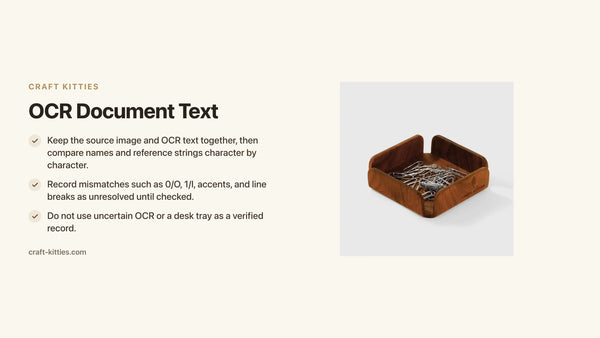
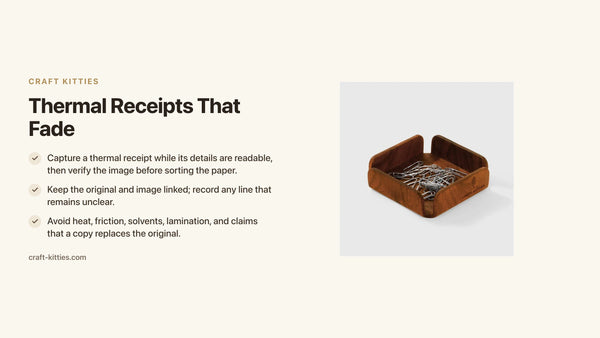
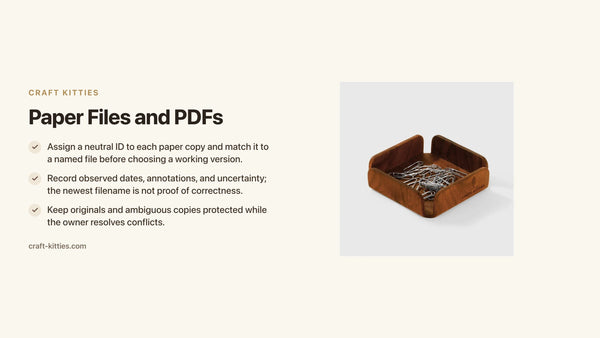
Clear capped pencils, pastels in containers, and labels separately from the artwork. A tray can organize clean, capped tools or enclosure labels beside the work, but no archival rating, frictionless surface, or chemical compatibility is documented for the linked product. Keep the artwork itself in appropriate support. The small walnut tray listing gives an overall 10 × 10 × 3 cm size; that does not make it a frame, mat, or storage enclosure. The coffee tray listing does not establish conservation properties either.
For a clearer work surface, our desk decluttering guide and wooden trinket tray guide address ordinary desk organization, not artwork care.
Know when ordinary clearing should stop
If the sheet is valuable, powdery, torn, stuck to another sheet, or has unknown media, do not continue with a DIY handling routine. Leave it supported and contact a qualified paper conservator, archive, or museum. This guide does not recommend a fixative, flattening, or an improvised sleeve. Preserve what is known, mark what is uncertain, and ask before making contact with the image.
Clear neighboring supplies before moving the work
Move ordinary tools and papers away from the drawing first, rather than moving the artwork to make room for them. Keep capped tools and labels in a separate organizer. Do not slide a tray beneath a drawing or use its rim to lift a sheet. If the work can remain on its existing support, clear the surrounding area and leave that support undisturbed.
If the drawing must move because the desk is needed, identify the person responsible for handling it and the destination support before lifting. If either support or medium is unknown, stop and ask for advice. Do not make a carrier by placing the work between two boards or sheets unless a conservator or the artist confirms that contact is appropriate. The cited LOC and NARA guidance describe the risks of unsuitable contact and unsupported edges; they do not provide a DIY transport method for every drawing.
A clean desk can wait. Preserving the current support and avoiding friction are more important than finishing the surface reset in one session.
Protect the image while removing ordinary desk clutter
Move a keyboard, notebook, capped pens, and other unrelated objects away from the drawing’s support. Lift those tools individually rather than pulling them across the artwork. Keep liquids and loose powders away from the work area. Do not sweep crumbs or pigment toward the sheet with a cloth; clean the surrounding desk only after the drawing is safely supported elsewhere or the workspace around it is cleared.
If the surface itself is dusty, do not clean the drawing. The paper-care sources warn about contact and unstable media; they do not provide a universal cleaning method for pastel or charcoal. Ask the artist or conservator before applying a brush, vacuum, fixative, or other material. If an enclosure is already in use, keep it with the artwork and avoid inserting a new plastic layer without confirming suitability.
The most useful record is the known medium, visible condition, and what support it currently rests on. That gives a conservator context without exposing the image to an improvised treatment.

Description
If an artist is available, ask how the current support can be moved and whether the medium is fixed or loose. Record the response and follow it for that work only; do not turn one artist’s process into a universal treatment for other drawings.
FAQs
Can I slide pastel drawings into plastic sleeves?
Not without knowing the material is suitable for that medium. The cited preservation sources caution against unsuitable plastic for loose powdery media; seek a proper enclosure recommendation.
Should I brush charcoal dust off before moving the drawing?
No. Do not rub or brush the image. If material is moving or falling, stop and ask a conservator how to proceed.
Can a tray hold a drawing while I clear the desk?
No conservation suitability is documented for the tray. Use it only for clean, capped tools or enclosure labels; keep the artwork on its existing suitable support.
What if I do not know whether the work is pastel or charcoal?
Record the medium as unknown and avoid touching or enclosing the surface experimentally. Ask the artist or a qualified conservator.