At a glance
- Record the plant, source, label care, visible condition, and growing-medium state before grouping it with other plants.
- Separate a concerning new arrival while you identify the issue; do not apply a fixed quarantine duration.
- Use a decorative outer pot only after the growing-pot fit and dry exterior are confirmed.
A new desk plant looks ready to display, but first capture a baseline. Recording its identity, label instructions, visible condition, and growing-medium state makes later changes easier to notice. If it appears unhealthy or you cannot identify a concern, keep it apart while you seek plant-specific advice. There is no universal number of isolation days that proves a plant is safe to group.
Record the plant’s identity and source
Write a plant ID, the date received, and the seller or source if known. Keep the label or a photo of it with the record. Note the plant’s name exactly as printed; if the name is incomplete or uncertain, mark it unknown instead of substituting a guess. Capture the care text as supplied, but treat it as a starting point rather than a schedule that applies to every room.
The RHS advises checking each plant’s light, temperature, and watering needs and inspecting a new plant for trouble before placing it with others. See its houseplant growing guide. This supports an observation record, not a fixed quarantine period or preventive pesticide treatment.
Inspect what is visible without disturbing the plant
Look at the top and underside of leaves, stems, and the potting medium. Note a visible pest, spots, wilting, broken stems, or simply “no concern observed.” Avoid touching or turning delicate leaves unnecessarily. Do not spray, dip, prune, or apply a homemade remedy as a precaution. If you see a potentially spreading pest or a plant that looks poorly, keep it separate while you identify the concern.
Check the growing pot and drainage arrangement only where safely visible. If a removable nursery pot sits inside a decorative outer pot, leave it in place until you can lift it without force. Do not share runoff with established plants. The decorative planter’s ceramic insert may be display-only; material alone does not prove drainage or fit.
Use a record that preserves what is unknown
| Plant ID | Normal baseline | Observed concern | Photo reference | Temporary position and conditions | Follow-up criterion | Expert question |
|---|---|---|---|---|---|---|
| A — new desk plant | Name as printed; label light note | No concern observed; medium state recorded | File name A-leaves, if made | Separate desk spot; note light source | Recheck on chosen date without assuming a treatment | Is the plant name and care label clear? |
| B — plant with wilted leaf | Species uncertain | One leaf droops; growing mix appears wet | File name B-leaf | Apart from established plants while identified | Check condition against species guidance | Could this symptom relate to excess water or another factor? |
| C — plant with visible speckling | Name copied from label | Speckling present; insect identity unknown | Close and whole-plant photos | Separate, stable spot; avoid contact with neighbors | Follow up when expert advice is available | What evidence is needed to identify the concern? |
These examples are invented scenarios to show how to complete the form, not observed plants or diagnoses. Keep each follow-up criterion observable, such as “recheck visible leaf condition,” rather than promising that a plant will recover or be safe after a set period.
Group only after you can describe the concern
Keep a concerning plant apart while you identify what you saw and check appropriate guidance. Do not use a calendar count such as 20 or 30 days as a universal clearance rule. If you cannot identify the plant, a possible pest, or the correct care conditions, ask a horticultural professional or local extension service. Do not share a water tray or drainage runoff during the observation period.
The RHS guidance for a poorly houseplant explains why moisture and other conditions need checking before taking action. It does not diagnose a plant from a photo or establish a quarantine length.
Use the outer pot only after checking the fit
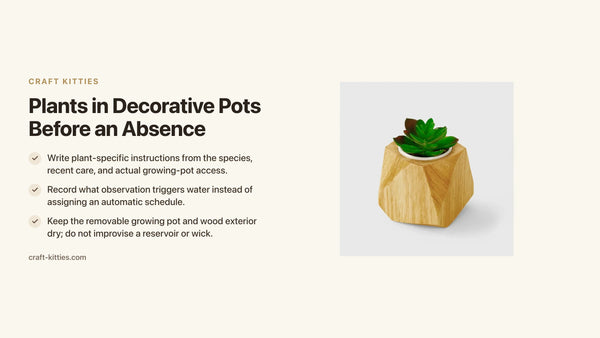
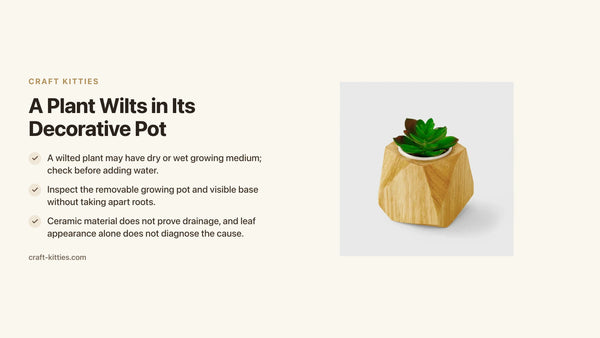
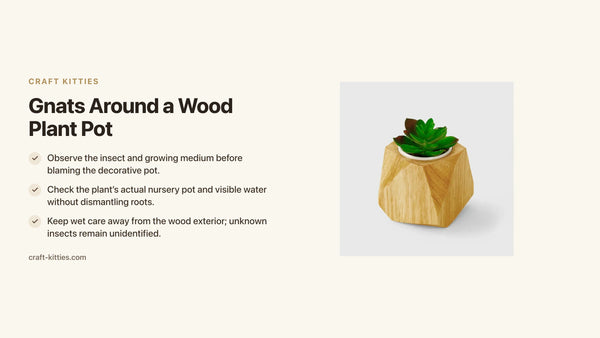
The Craft Kitties planter listing describes an outer rubberwood pot measuring 110 × 80 × 80 mm and an inner ceramic cup measuring 57 mm in diameter and 62 mm deep. Those listed dimensions help identify the product but do not establish usable clearance for every growing pot or prove the ceramic cup drains. See the rubberwood planter listing. Confirm the actual nursery-pot fit and keep the wooden exterior dry before returning it.
For broader desk greenery placement, our biophilic décor guide and walnut pencil holder guide cover separate styling and desk organization choices.
Keep a short follow-up log without inventing a clearance date
Choose a follow-up date based on the plant owner’s needs or an expert’s advice, not a standard quarantine duration. At the follow-up, record only visible changes: whether the concern remains, appears different, or was identified. Do not use “looks fine” as a clearance certification or assume that no visible insect means there is no pest.
Keep the incoming record with the plant ID. If the plant is later grouped, retain the observations so future care has context. If it remains separate, note why and what information would resolve the uncertainty. Ask the plant supplier or a qualified horticulturist when the name, medium state, or condition is unclear. This record is a way to preserve observations; it cannot confirm disease status from a photo or prove a plant is safe for other plants.
Avoid adding treatments “just in case.” A preventative dip or pesticide changes the plant and may be inappropriate for its species. Wait for a specific recommendation supported by the identified issue.
Preserve a neutral baseline for later comparison
Photograph the whole plant and any specific visible concern using the same general framing. Keep the image name tied to the plant ID and date, and avoid a close-up that loses context about which leaf or stem is shown. The optional photo supports your own record; it is not a claim that the image can identify a pest or certify plant health.
Record “not observed” separately from “checked and absent.” For example, if you did not inspect the underside of a leaf, do not write “no pests.” Note “underside not inspected.” This makes the record useful to another person without implying a thorough inspection took place. If the plant is too delicate to turn safely, leave that field unknown and ask a plant professional.
At the follow-up, compare only the same visible features and write the result in plain words. If conditions changed, note that as context. Do not turn a temporary improvement into a guaranteed clearance or transplant the plant to a shared spot until the concern is understood.

Description
FAQs
How long should I keep a new plant separate?
There is no universal duration established here. Separate it while you identify a visible concern and follow plant-specific or expert advice.
Should I apply pesticide before grouping a new plant?
No preventive treatment is recommended by this procedure. Identify the plant or pest and ask a qualified source before choosing any treatment.
What if the plant arrives without a name?
Record the name as unknown and keep its label or source information. Ask a plant expert to identify it before assuming care needs.
Can the ceramic cup serve as the plant’s growing pot?
The listing gives an inner cup size but does not establish fit, drainage, or growing suitability for every plant. Confirm with the maker and plant-care source.