At a glance
- A wilted plant may have dry or wet growing medium; check before adding water.
- Inspect the removable growing pot and visible base without taking apart roots.
- Ceramic material does not prove drainage, and leaf appearance alone does not diagnose the cause.
A wilted plant is easy to read as “thirsty,” but adding water without checking can make a wet-root problem worse. First identify the plant and its recent care, then inspect the growing medium and any safely visible water at the base. This is a focused moisture check, not a diagnosis of every plant disease.
Pause before watering again
Record when the plant was last watered and whether the leaves or stems changed before or after that care. Do not automatically add water, fertilizer, or a home remedy. The Royal Horticultural Society notes that too little and too much water can both contribute to wilting; its advice is to check moisture and conditions rather than follow a fixed schedule. Read the RHS guide to a poorly houseplant.
Name the plant if you can. If the label is missing, take a photo for identification rather than guessing its species and watering needs. Light, temperature, and growing medium can affect what “dry” means for a particular plant. A plant’s leaves alone do not tell you whether the roots are dry, saturated, or damaged.
Check the nursery pot and visible water
If the plant is in a removable nursery pot inside a decorative outer pot, lift it only if it comes out without force and the plant remains supported. Check the medium’s surface and any visible water below the nursery pot. Do not remove soil, cut roots, or dismantle the plant to investigate. If the growing pot cannot be reached safely, record that as an access limitation.
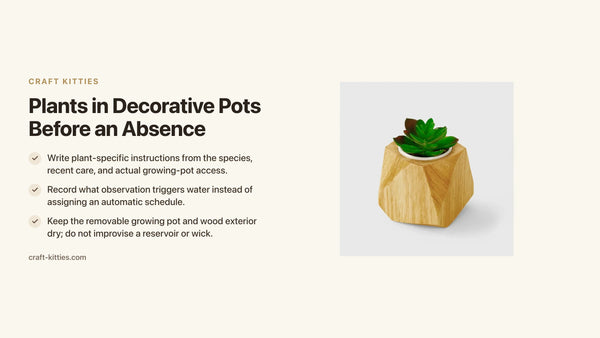
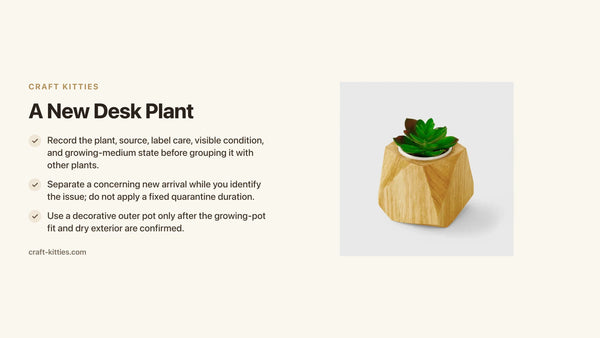
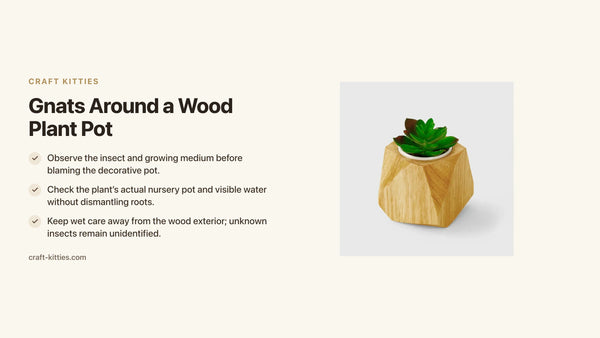
The linked decorative pot is described as rubberwood with an inner ceramic cup, an outside size of 110 × 80 × 80 mm, and a cup listed at 57 mm diameter by 62 mm deep. Those statements do not establish that the cup has a drainage hole, that all nursery pots fit, or that the plant is protected from overwatering. See the product listing and ask the maker about the exact insert if drainage is unclear.
Compare the observation before choosing an action
| Observation | What to inspect | Action to pause | Species-specific check | Expert question |
|---|---|---|---|---|
| Wilt with visibly dry medium | Recent watering and the actual medium condition | Do not assume one watering amount fits every plant | Check the plant’s care guidance and normal light/temperature | What gradual watering method is appropriate for this species? |
| Wilt with visibly wet medium | Standing water or persistently wet mix, if safely visible | Do not add more water automatically | Check drainage and species instructions | Is the plant showing a root or other issue needing assessment? |
| Growing pot inaccessible | Whether it can be removed without force | Do not tug the plant or separate roots | Ask how to inspect the actual growing pot | How should the insert be removed or checked? |
| Plant visibly damaged | Torn stem, leaf damage, or another clear condition | Do not cut or apply fertilizer as a guess | Record the condition and history | Should a plant professional assess it? |
| Recent care unknown | Ask whoever last cared for the plant, if appropriate | Do not reconstruct a schedule from leaf appearance | Identify the species and care instructions | Which observation would clarify next steps? |
These are hypothetical examples rather than treatment outcomes. Change no more than one appropriate care factor at a time, based on species guidance, and record what you did. If the plant continues to wilt or you cannot inspect the growing medium, stop improvising and ask a plant expert.
Keep the decorative wood exterior dry
If the growing pot is removed for inspection, do the check away from the wood planter. Return it only when its outside is dry and the placement does not trap visible water. This is a handling precaution, not a claim that the planter has drainage, a reservoir, or a waterproof finish. UC IPM recommends inspecting houseplant water, drainage, and light conditions in its houseplant problems guide.
For an unrelated desk display context, our biophilic décor guide and walnut pencil holder guide cover other ways to organize a surface; neither supplies plant treatment advice.
Compare the medium observation with the watering history
Record whether the last watering was a small top-up or a normal species-guided watering only if you know. “Someone watered it recently” is useful context; an exact amount or time should not be invented. If a caretaker is available, ask what they did, then keep that response in the record as a reported detail rather than a measured root condition.
If the medium feels inaccessible, do not insert tools or dig into the pot for this check. Use what can be seen safely, consult the plant’s instructions, and ask a horticultural expert if the leaf change continues. A wet surface does not prove every root is saturated; a dry surface does not establish that the whole root zone is dry. This is why the next action should follow the species guidance and why a single leaf cannot settle the diagnosis.
Keep the decorative planter out of the reasoning about plant health unless it obstructs access or visibly holds runoff. If the nursery pot cannot be removed easily, stop and ask the maker how that insert is intended to work rather than pulling at the stems.
Decide what information would change your next step
Before intervening, ask whether you know the species, whether the medium has been checked, and whether water is visible below the growing pot. If all three are unknown, adding water is not an information-gathering step; it changes the condition before you understand it. Pause, identify the plant, and request the missing care history. If the plant is in a known species but a wet medium, follow that plant’s source guidance and ask an expert if symptoms continue.
Separate a damaged leaf from a whole-plant pattern. Record whether one leaf is affected, whether stems are damaged, and whether the concern is changing. Do not prune or fertilize based on an appearance alone. Photos taken at the same distance and lighting can help a plant specialist compare changes, but a photo is not a root diagnosis. Do not lift or dismantle the root ball as a shortcut to certainty.
The appropriate action may be to wait, inspect, or seek expert advice; it is not automatically more water.

Description
If the only evidence available is the leaf, write “cause unknown” and wait for species-specific advice rather than deciding that either dry or wet medium is confirmed. A follow-up photograph can document visible change, but it cannot substitute for checking the growing pot safely.
FAQs
Should I water a plant as soon as it wilts?
Not without checking the growing medium and recent care. Both too little and too much water can be associated with wilting, so inspect first and consult species-specific guidance.
Can I tell from the leaves whether the roots are wet?
Not reliably from appearance alone. Check the medium and visible base only where accessible; ask an expert if the plant remains unwell.
Does a ceramic inner pot drain excess water?
Ceramic material alone does not establish drainage. Inspect the actual insert safely or ask the maker.
Should I take the plant out of its pot to inspect roots?
This guide does not recommend root removal or surgery. Stop if the growing pot is inaccessible or the plant cannot be supported safely.